

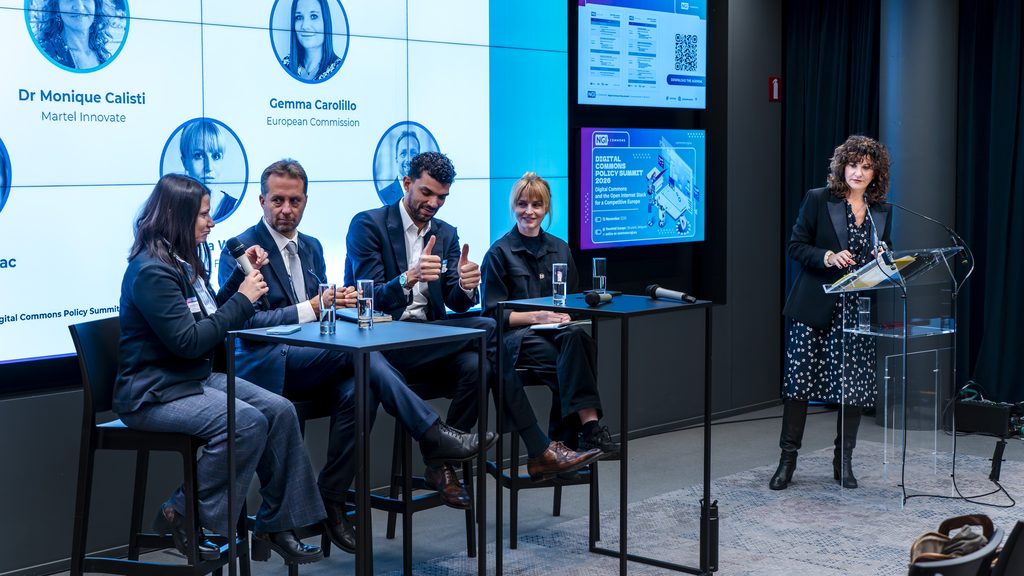
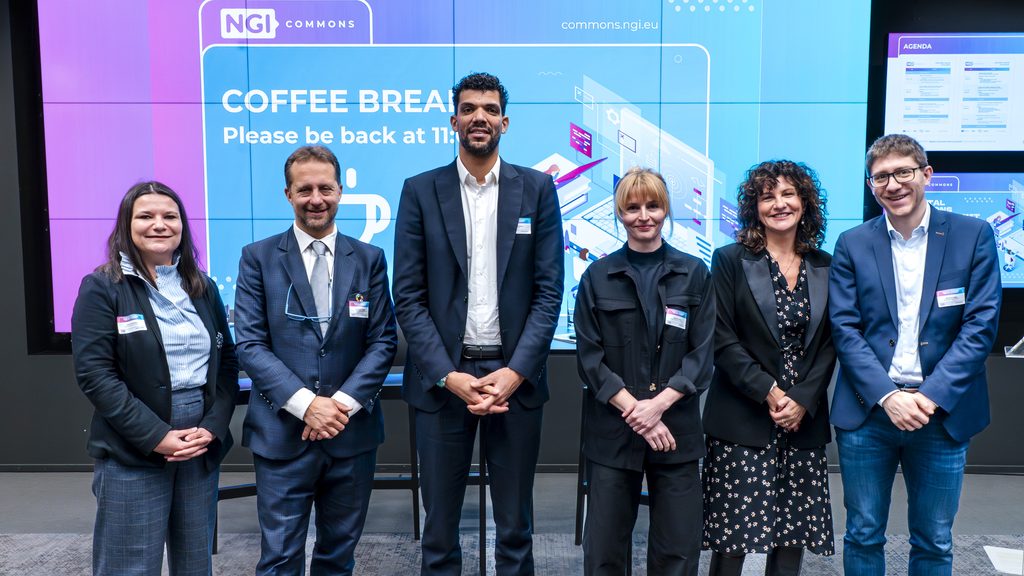
16th November, Brussels: The Digital Commons Policy Summit 2026 brought together more than 100 participants in person, almost 600 who streamed online: policymakers from the European Union, representatives from the private sector, civil society and the NGI community ? or the new ?Open Internet Stack? community. The common message that emerged was that open source and digital commons are no longer a niche topic. They are now an integral part of Europe?s technological sovereignty. The question that remains is how to ensure their long-term sustainability.
?We want to innovate and scale up, by focusing on both demand and supply. Digital commons and open source are crucial for Europe?s sovereignty and competitiveness, because they help us reduce our dependencies.?
Benjamin Bögel, Membre du cabinet de la vice-présidente exécutive de la Commission européenne chargée de la souveraineté technologique, de la sécurité et de la démocratie
Open source as a strategic enabler
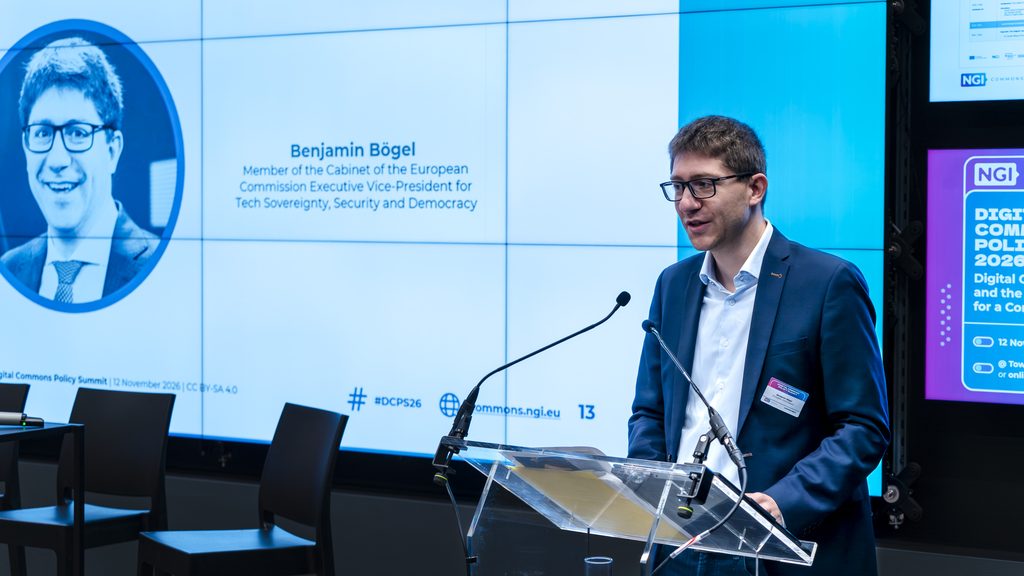
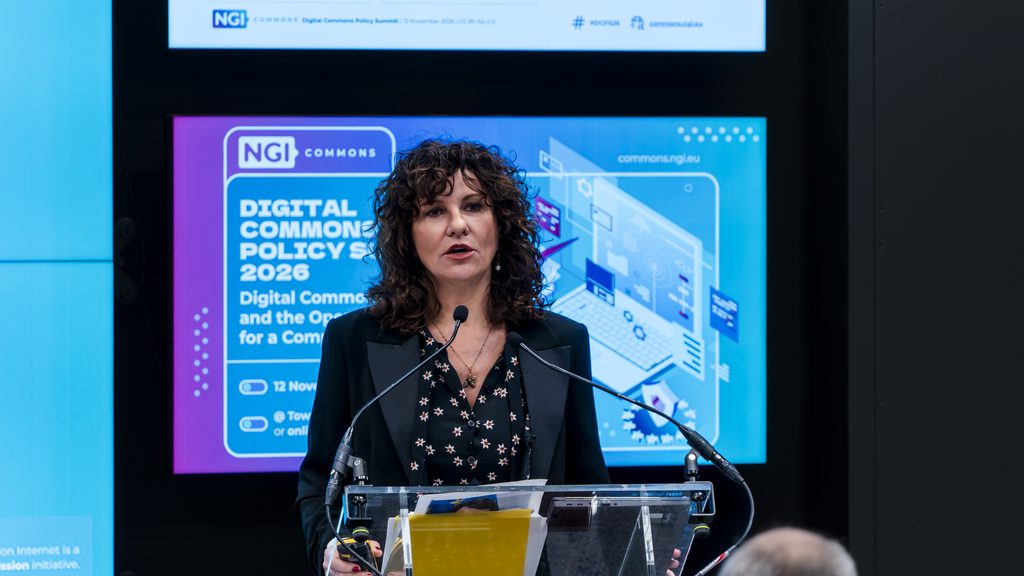
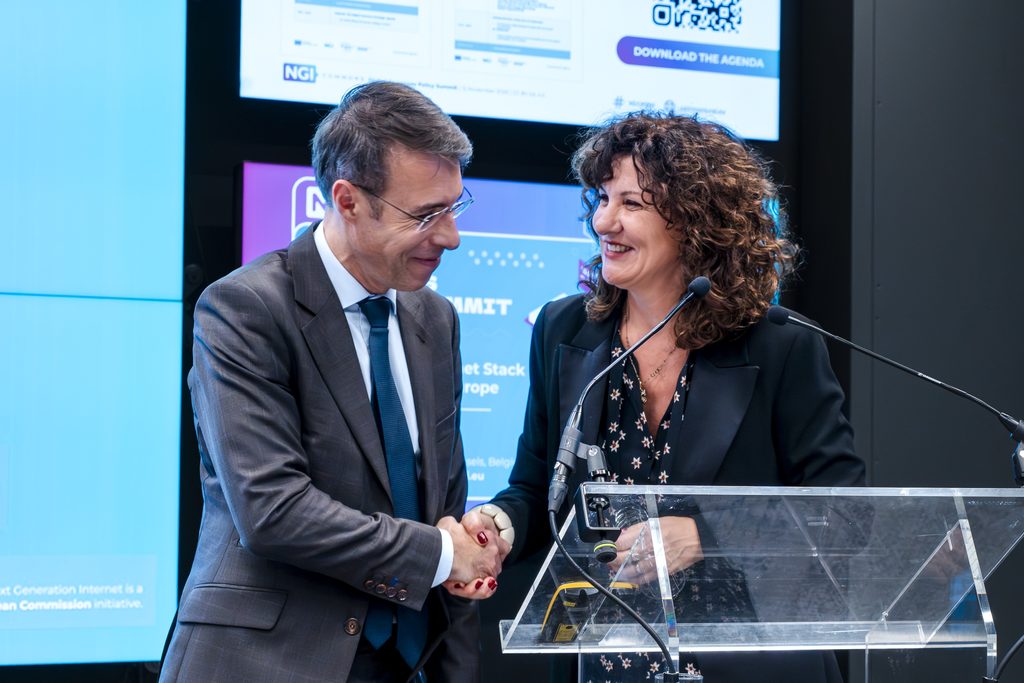
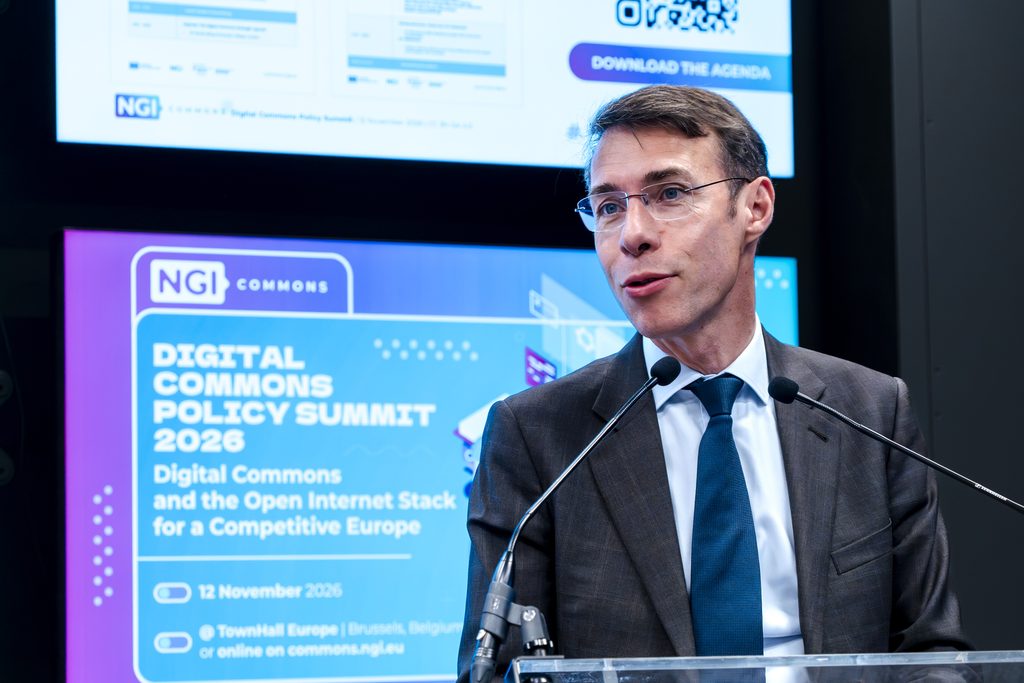
Monique Calisti, CEO at Martel Innovate, coordinating the Initiative NGI Commons opened the 2nd Digital Commons Policy Summit 2026 and welcomed Benjamin Bögel, Membre du cabinet de la vice-présidente exécutive de la Commission européenne chargée de la souveraineté technologique, de la sécurité et de la démocratie on stage. Opening the policy discussion, Benjamin Bögel, expressed that the debate is no longer about whether open source matters but comment? Europe can use it to compete. He said Europe can be sovereign without being protectionist, and he thanked NGI for laying the groundwork. The next step, he said, is to ?turn projects into products.? The Open Internet Stack builds on NGI with interoperable modules that comply with EU rules. He outlined the next steps under the EU open source strategy:
- a catalogue of open source solutions, starting mainly with NGI solutions
- guidance on integrating open source into public procurement
- a voluntary assessment framework for open source solutions
- ENISA work to identify the open source dependencies most at risk
- a stewardship toolkit for foundations
- a dedicated open source chapter in the Cloud and AI Development Act (CADA), a first for EU legislation
?The devil is in the details?
In the first panel entitled “Tech Sovereignty Package and the Digital Commons: Regulatory Sufficiency and What More Is Needed”, speakers from the European Commission, SMEs, cloud providers, and civil society welcomed the new framework. Moderated by Monique Calisti, panelists: Gemma Carolillo, from the European Commission, Enzo Ribagnac du CISPE , Zuzanna Warso from the Fondation Open Future, partner of NGI Commons project and Sebastiano Toffaletti contre from the Alliance européenne pour les PME NUMÉRIQUES expressed the importance of a new framework and strengthened that it was not enough.
?We cannot buy resilience.?
Gemma Carolillo, Deputy Head of Future Internet Unit at European Commission
The panelists warned about how it will be put into practice. Their main points were:
- Regulation alone is not enough.
- Foundations and standardisation bodies are often governed from outside Europe.
- Sovereignty must not be reduced to a single business model.
- Capacity, skills and long-term maintenance mechanisms have to be built. As Gemma Carolillo, Deputy Head of Future Internet Unit at European Commission, put it, ?we cannot buy resilience.?
Sovereignty for whom?
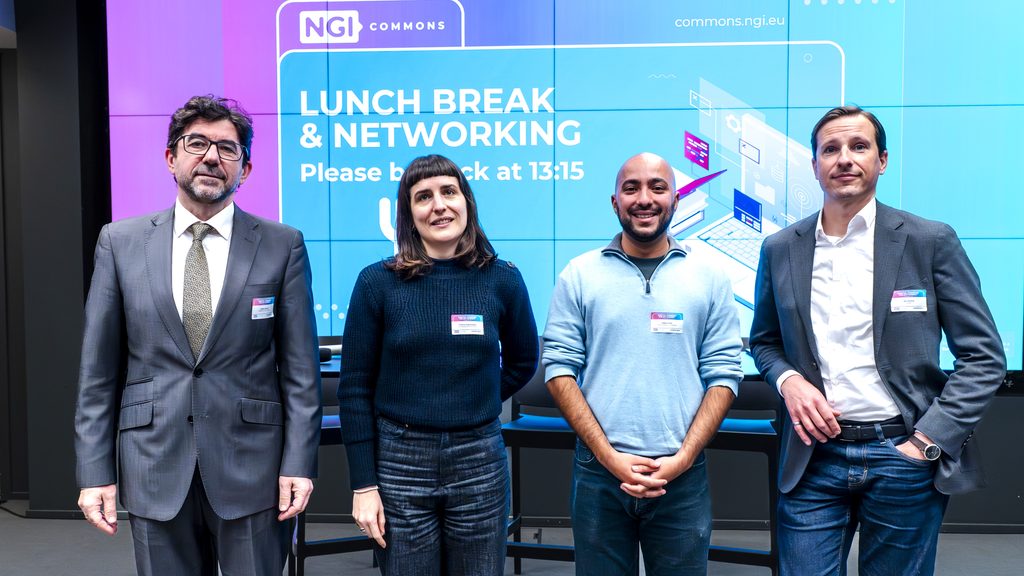
The strategic agenda panel widened the debate. Session 2 was about: “The Digital Commons Strategic Agenda: From Roadmap to Implementation ? looking ahead to FP10”. Speakers included Laszlo Igneczi du OpenForum Europe, partner of the NGI Commons initiative, Jan Penfrat du EDRi et Plixavra Vogiatzoglou du University of Amsterdam Institute for Information Law (IViR); argued that digital sovereignty should be about users and democratic control, not only about where technology comes from. They called interoperability and maintenance key weak points.
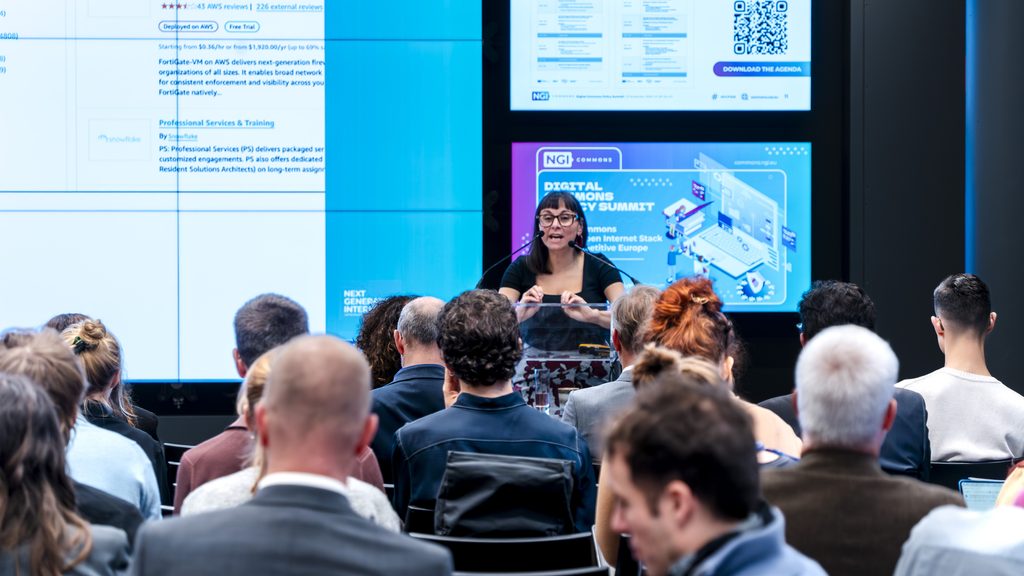
In her keynote, Cecilia Rikap, Associate Professor in Economics and the Head of Research at the University College London?s Institute for Innovation and Public Purpose, described how a few cloud and AI giants increasingly control knowledge production. She urged that the public sector break its dependence on Big Tech and that Digital Commons be built as ecosystems, with democratic governance from the start.
From commons to deployment: the Digital Commons EDIC
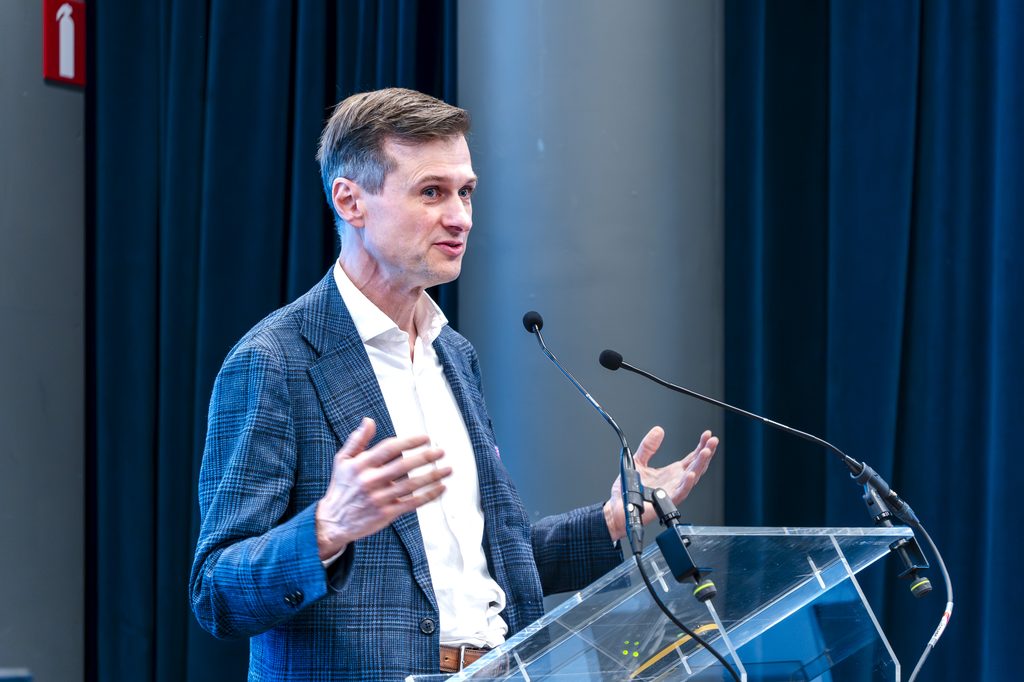
Laurent Rojey presented the CIED Commons numériques (DC-EDIC), which gives Member States a joint vehicle to pool investment and turn Digital Commons into services the public sector can use, working with the communities that build them. His intervention ended with a call to action to the community. Moderated by Valérian Guillier du CNRS, partner of the NGI Commons intiative, Session 3 explored with panelists: Emma Ghariani du DINUM, Rene Lührsen from Leuphana University of Lüneburg et Renata Avila from the Fondation de la connaissance ouverte; the intersection of Digital Commons, public institutions, and European technological sovereignty, highlighting how states and communities can collaborate beyond software to protect open standards, data, science, and culture. In his keynote introduction, DC-EDIC Director Laurent Rojey explained that the consortium founded in late 2025 by France, Germany, the Netherlands, and Italy, and now expanding to include Luxembourg, Poland (joining as a full member on January 1, 2027), and eight observer nations, is transitioning from strategic setup into operational delivery.
Guided by its recently adopted Implementation Strategy and a newly appointed Advisory Board, DC-EDIC focuses on three core pillars: deploying interoperable open source alternatives in everyday domains like collaborative workspaces (bridging national tools such as France’s LaSuite, Germany’s openDesk, and the Netherlands’ MijnBureau via agile “100-Day Challenges”), sustaining critical open source infrastructure dependencies in partnership with Germany’s Sovereign Tech Agency, and building a European network with a “one-stop-shop” hub to connect communities, users, and maintainers
Building the Open Internet Stack
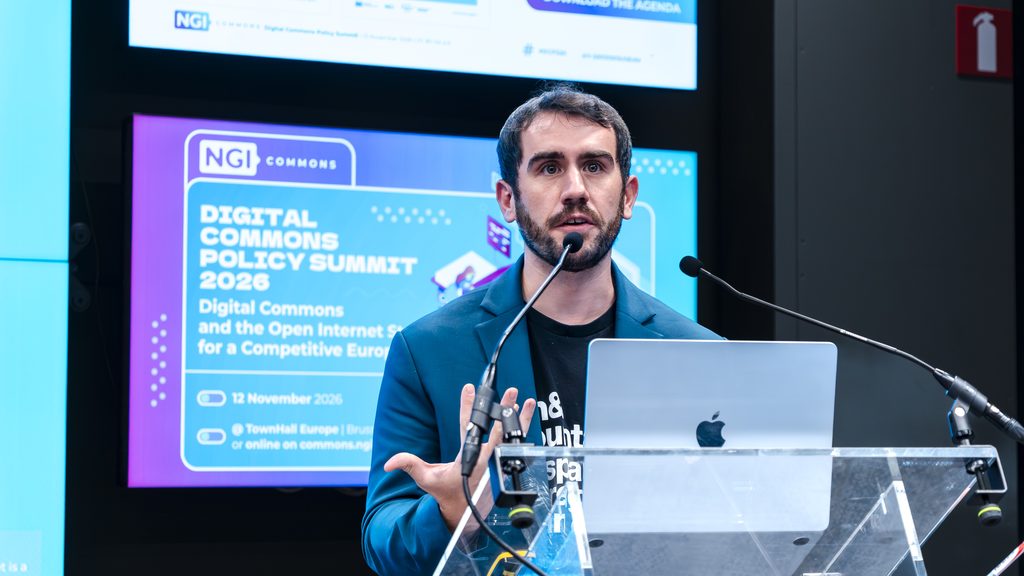
During session 4: “The Open Internet Stack Landscape and Context, Digital Commons and the Open Internet Stack initiative”. Panelists introduced 4 new projects. The ambition behind the Open Internet Stack initiative is high. And it is not one project, it is an ecosystem. Some projects build open components. Others screen and audit them, so they are ready to be trusted. Others put them to work in large-scale pilots. And others make sure that what is built actually meets the needs of the people and organisations who will use it. Four projects presented by four panelists: Michiel Leenaars, from NLnet., Dr Giovanni Rimassa from Martel Innovate, Mattia Trino from BDVA and Dr Monique Calisti from Martel Innovate to introduce how they are turning a decade of NGI bottom-up funding into a scalable stack. The session was moderated by Arta Ertekin, from Martel Innovate.
- OIS Restack, offering small and medium-sized grants
- INCLUDE, aligning the computing-continuum ecosystem
- EURO-3C, a federated sovereign pilot infrastructure across telecom, edge and cloud
Monique Calisti summed it up: the goal is ?to open up one cathedral and let the bazaar join in.?
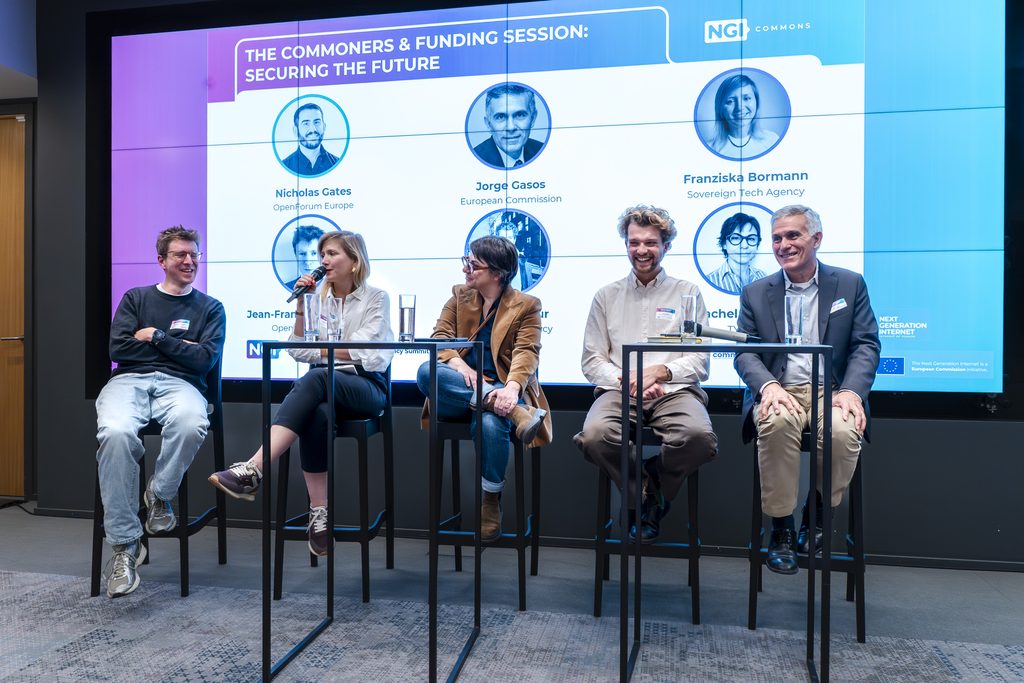
The last session put commoners and funders on stage together. Moderated by Nicholas Gates du OpenForum Europe, partner of NGI Commons, it brought together the Commission européenne thanks to Jorge Gasos, le Agence des technologies souveraines thanks to Franziska Bormann contre, Jean-François De Hertogh du Open Collective Europe, Arnaud Lesur du Consul Démocratie and Rachel Foucard du TYPO3: the communities that build and maintain digital commons, and the organisations that fund them.
Jorge Gasos, NGI Commons Project Officer at the European Commission, shared his expectations for the future funding landscape for digital commons beyond the Horizon Europe calls. The discussion turned to a question that runs through the whole Summit: how to give the people who maintain open-source projects stable, long-term support, so that the commons Europe increasingly relies on remain secure and sustainable.
What comes next
The EU now has everything it needs to make open source ?the main show.?
Thibaut Kleiner, Director for Future Networks at the European Commission?s DG CONNECT
Closing the summit, Thibaut Kleiner Director for Future Networks at the European Commission?s DG CONNECT, said the EU now has everything it needs to make open source ?the main show.? The task now is to show that switching to open source works. He also called on the community to join forces and consolidate rather than create more and more repositories. Jorge Gasós stressed the move from research towards deployment, and said projects need to become less and less dependent on public funding. To close the Digital Commons Policy Summit 2026, Thibaut Kleiner, gave a clear message. Europe now has everything it needs to make open source ?not just a fringe, but really the main stage?. He warned that this moment of transition is also a chance that could be lost.
Thibaut Kleiner said returning to the NGI community felt like ?a family reunion?. He recalled that the Commission adopted its open source strategy last June as part of the Tech Sovereignty Package, which was ?not a given?. Open source won broad support across the College of Commissioners because open technology can be reused, forked and shared across the EU. He also said it reflects European values of cooperation across borders.
He then gave three messages to the community:
1. Prove that open source works and is the best. The goal is not public funding for its own sake, but to make open source ?a valid proposition no matter what?. Kleiner pointed to the Digital Commons EDIC, which is growing with more Member States and strong institutional support. Its role is to show that switching from proprietary to open source solutions works, and to share best practices and lessons learned. He criticised press stories claiming open source solutions ?don?t work?. Where projects fall short, he said, they should be fixed, and AI is a chance to raise their quality. ?Europe is the continent of quality,? he said, and that should hold for software too. ?Let?s not compromise.?
2. Consolidate instead of fragmenting. Kleiner welcomed the continuity between NGI and the new Open Internet Stack projects. He warned against having several repositories or platforms that do the same thing. ?Diversity is a strength until it becomes a fragmentation,? he said. He called for the Digital Commons EDIC and the Open Internet Stack to serve as a ?centre of gravity?, which he said does not mean a monopoly. Otherwise, initiatives risk remaining ?tiny, small and beautiful? without real impact.
3. Move from commons to adoption. Making Digital Commons available is not enough. They must turn into real solutions that as many people as possible use. Funding should not be ?the end of the story? but a chance for the future.
Thibaut Kleiner ended with the hope that next year?s edition will be ?even bigger and better? and will show the first results of the new projects. Closing the event, the organisers said there is no fixed date yet, as the community is in transition, but there will be a next edition. They invited participants to follow the Open Internet Stack projects? communication channels.
Faits marquants du programme
Priorities for 2026:
The European Commission?s open source strategy and what comes next: a catalogue of open source solutions, public procurement guidance, a stewardship toolkit for foundations, ENISA?s mapping of critical dependencies, and the open source chapter in the Cloud and AI Development Act (CADA).
Session 1: Tech Sovereignty Package and Digital Commons. How regulation, standardisation, procurement and European preference can strengthen open source without damaging the market or cutting off international collaboration.
Session 2: The Digital Commons Strategic Agenda. Democratic governance, user-centred sovereignty, interoperability, maintenance, and the role of civil society.
Keynote by Cecilia Rikap: ?From the Rulers to the Commons.? Big Tech?s control of the AI and cloud ecosystem, and why the public sector needs to break its dependence on these companies.
Session 3: The Digital Commons EDIC and the commoners. Laurent Rojey presented the Digital Commons EDIC, which gives Member States a joint vehicle to pool investment and turn digital commons into services the public sector can use, working with the communities that build them.
Session 4: The OIS landscape. OIS REBASE, OIS HUB, INCLUDE and EURO 3C on how to turn a decade of bottom-up funding into a scalable, interoperable open stack.
Session 5: The commoners and funding. The future of NGI funding, moving from research to deployment, and how projects can become less dependent on public funding.
 French
 English