
The European open source and Digital Commons communities gathered in Brussels in late January for the EU Open Source Week, which ran from 26 January to 1 February. The week brought together policymakers, industry leaders, and community advocates to discuss the future of open technologies in Europe.
During the week, a series of high-profile events underscored the growing recognition of open source software (OSS) and other Digital Commons – particularly open standards and open source hardware (OSH) – as foundational elements of Europe’s digital sovereignty and other policy strategies. The week was well-timed with the end of a recent consultation period on the European Commission’s updated open source software strategy, which had a Call for Evidence on the topic of “open digital ecosystems” that was open until 3 February.
Policy Engagement: EU Sovereign Tech Fund Takes Center Stage
One of the highlights of the early week was a breakfast briefing at the European Parliament focused on the proposed EU Sovereign Tech Fund, an initiative aimed at providing sustainable funding for critical open source infrastructure. Hosted by Member of the European Parliament Michal Kobosko (representing Renew Europe in Poland), the event attracted over 45 participants representing more than 30 institutions across the European technology and policy landscape.
OpenForum Europe (OFE) and research partners presented findings from their comprehensive EU-STF feasibility study, outlining various institutional frameworks and funding mechanisms available to European institutions. The presentation addressed key questions about governance structures, budget allocation, and operational models for supporting the open source ecosystem at a continental scale.
The briefing featured notable participation from the European Commission’s Directorate-General for Communications Networks, Content and Technology (DG-CNECT), with Thibaut Kleiner, Director of Future Networks, attending alongside Wolfgang Gehring, FOSS Ambassador/Open Source Program Office Lead at Mercedes-Benz. This cross-sector representation highlighted the multi-stakeholder nature of discussions around open source funding in Europe and the need for pooled financing to address Europe’s open source maintenance needs, if it is to achieve its digital policy priorities.
Celebrating Open Source Excellence: European Open Source Awards Honor Community Leaders
The 2nd Annual European Open Source Awards ceremony recognised individuals and projects making significant contributions to the European open source ecosystem. The awards ceremony has quickly become a cornerstone event for acknowledging the diverse ways contributors advance open technologies across the continent.
Greg Kroah-Hartman of the Linux kernel community, who is employed as a Fellow at the Linux Foundation, received the Prize for Excellence in Open Source, the ceremony’s highest honor. Kroah-Hartman’s decades of contributions to the Linux kernel and his role in maintaining critical infrastructure have made him one of the most influential figures in the global open source community.
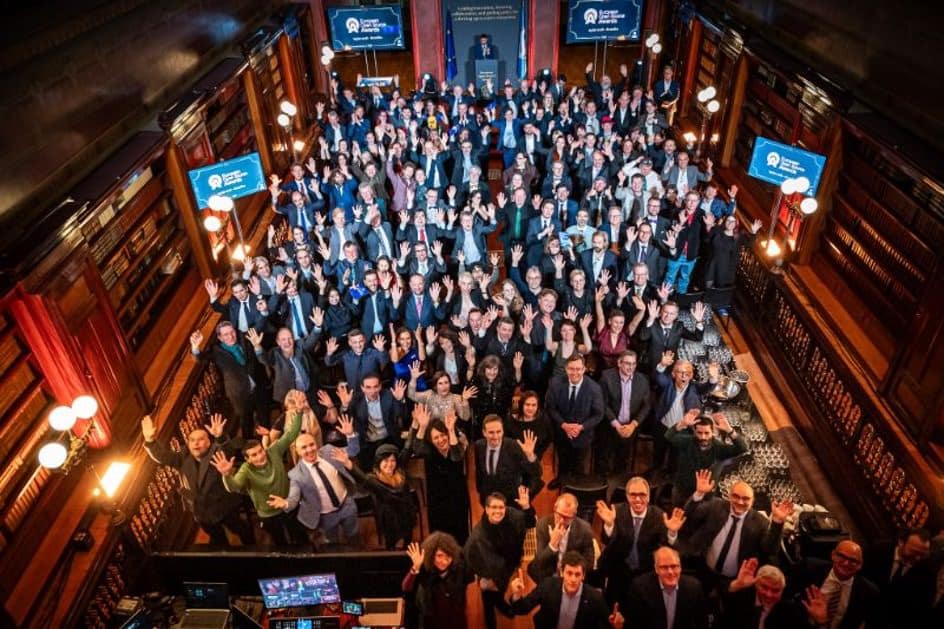
Special Recognition awards were presented across four categories. Frank Karlitschek, founder of Nextcloud, received recognition for Business and Impact, acknowledging his work in building successful open source business models and advancing data sovereignty. Dr. Jenny Molloy of the University of Cambridge and the Open Science Hardware Foundation was honored for Advocacy and Awareness, recognising her efforts to promote open science and hardware initiatives.
Matt Venn of Tiny Tapeout received Special Recognition for Skills and Education, celebrating his innovative approaches to teaching hardware design and democratising access to chip manufacturing. Roberto Di Cosmo and Stefano Zacchiroli of Software Heritage were jointly recognised for Community Impact, honoring their work in preserving software source code as a commons for future generations.
Strategic Policy Discussions: EU Open Source Policy Summit
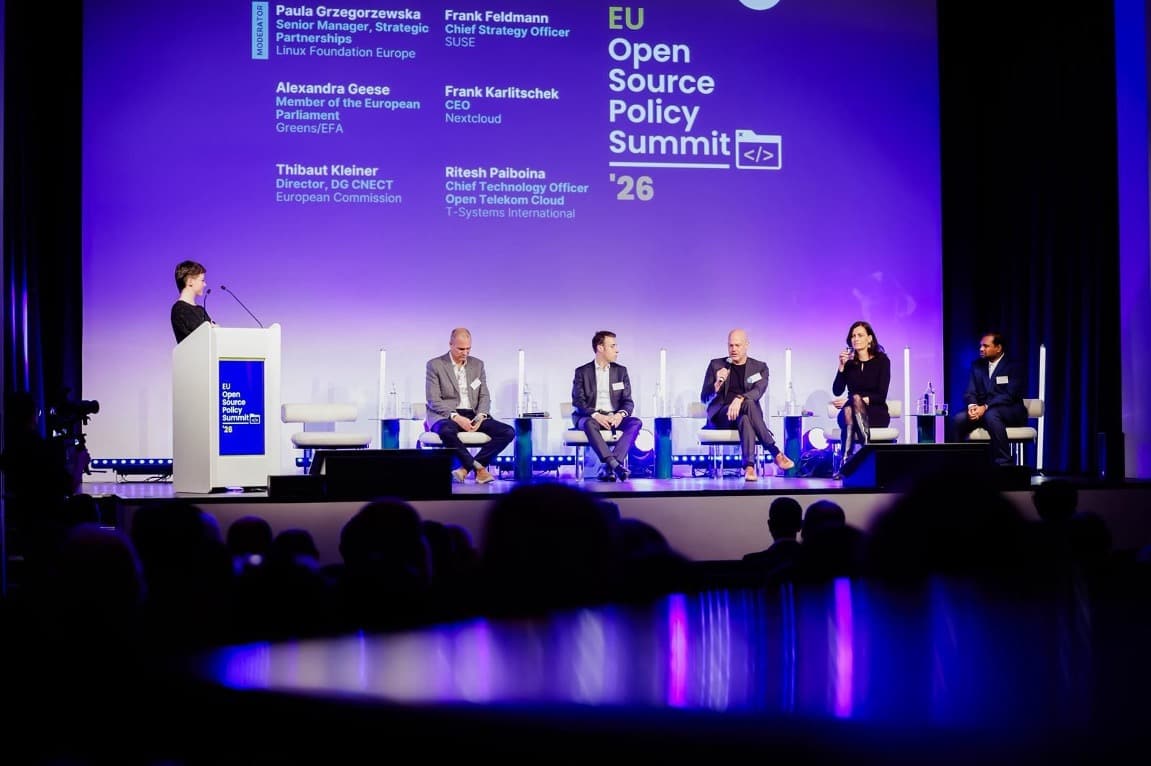
The EU Open Source Policy Summit convened stakeholders to explore the overarching theme of “Digital Sovereignty Runs on Open Source”. The summit featured a number of panel discussions, with topics ranging from Europe’s software challenges and the role of Open Source Program Offices in institutional transformation to the intersection of open source with cloud and AI infrastructure and the ongoing considerations around the role of open source in public procurement reform.
Panel discussions addressed pressing questions about how European institutions can leverage open source to reduce dependencies on proprietary technologies while building competitive advantages in emerging technology sectors. Procurement discussions focused on how public sector organizations can better evaluate and adopt open source solutions.
The summit also served as the platform for announcing Laszlo Igneczi as the new Executive Director of OFE, marking a significant leadership transition for the Brussels-based think tank that has been instrumental in shaping European open source and Digital Commons policy discussions. (OFE is represented in the NGI Commons consortium and was previously led by Astor Nummelin Carlberg.)
Community Gathering: FOSDEM Weekend
The FOSDEM 2026 conference weekend provided the community-oriented counterpoint to the week’s policy-focused events. Several tracks were particularly relevant to digital commons and policy discussions, including sessions on funding the FOSS ecosystem, open source and EU policy, building Europe’s public digital infrastructure, and legal and policy considerations.
NGI Commons consortium partner Open Future collaborated with ZenDis (the Center for Digital Sovereignty in Germany) and DINUM (France’s Interministerial Digital Directorate) to present “Power to the Stack: Governing Europe’s Digital Commons,” a session examining governance frameworks for digital infrastructure and exploring how European values can be embedded in technological architectures.
Key Observations and Future Directions
The week revealed several emerging trends in European open source policy. Digital Commons policies and frameworks are experiencing renewed attention, providing language and concepts for discussing the values and governance of open technologies. The European Commission’s Call for Evidence on open digital ecosystems has catalysed widespread discussion about future policy directions, and was a frequent topic of discussion across the week.
While the momentum was palpable and policymakers from the Commission showed up to say the right things, participants noted that several key initiatives remain in formative stages. The Open Internet Stack, while frequently referenced by Commission officials, does not yet have a clear definition regarding scope and implementation. Similarly, the Digital Commons European Digital Infrastructure Consortium (DC EDIC) is still being shaped, coordination around the revision of the Commission’s open source software strategy between DG-DIGIT and DG-CNECT remains uncertain (despite an overwhelming response to its call for evidence), and the prospects for open source maintenance funding remain unknown.
While rhetorical commitments to funding digital commons were evident throughout the week, concrete budget allocations and funding mechanisms remain under discussion. This was particularly prominent during a fireside chat between Thibaut Kleiner and journalist James Kanter during the European Open Source Awards ceremony. The connection between pending legislative efforts – including reform of the Public Procurement Directive and development of cloud and AI regulations – and open source adoption strategies requires further clarification.
All in all, the EU Open Source Week demonstrated significant momentum in elevating open source and Digital Commons within European policy discussions, while highlighting the substantial work remaining to translate policy commitments into operational programs and sustainable funding mechanisms. The EU Open Source Week was oversubscribed and busy across over 40 events, speaking to the enthusiasm for Digital Commons in helping Europe to address its pressing public policy challenges.
 English
  French