
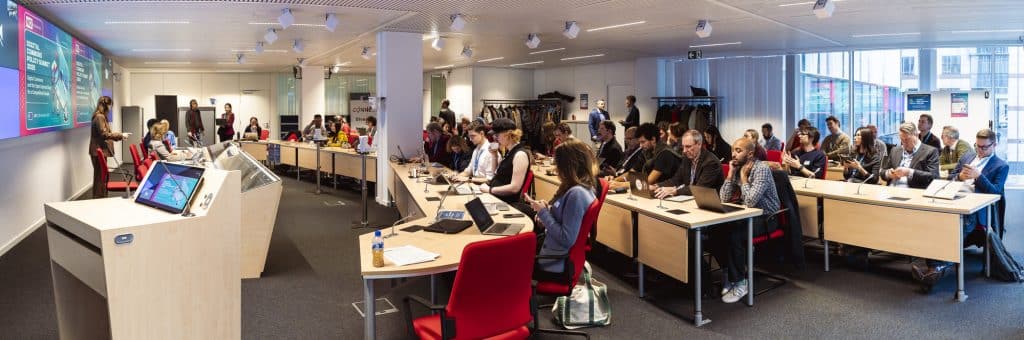
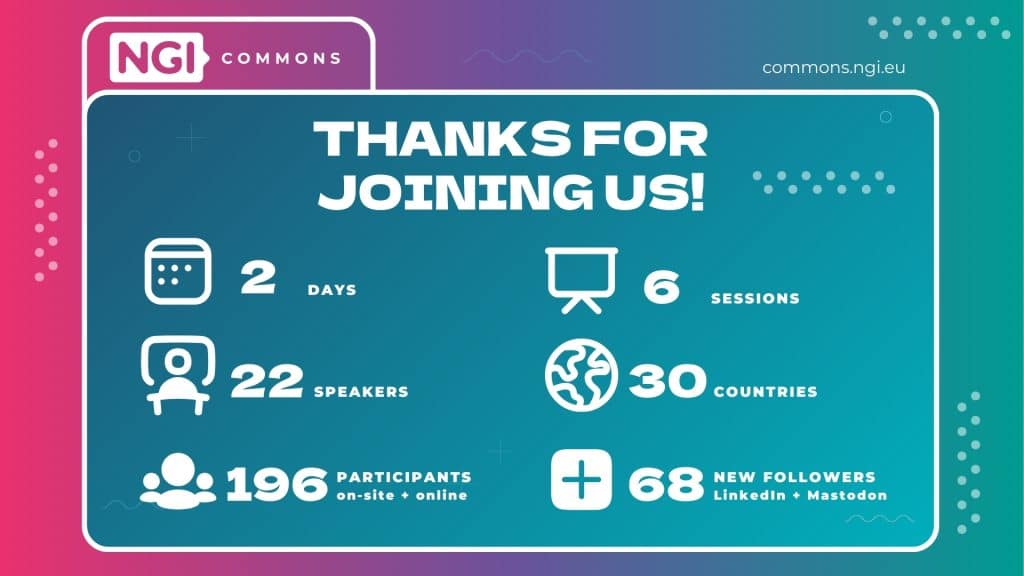
The Digital Commons Policy Summit 2025: Digital Commons and the Open Internet Stack for a Competitive Europe, was held in Brussels on 20–21 November 2025. Policymakers, public authorities, technologists, and prominent figures from the open-source and Digital Commons communities met for two days of focused discussion on the future of Europe’s digital infrastructure. Organised by the NGI Commons initiative, the Summit delivered a clear message: in Europe, the question is no longer whether to adopt Digital Commons, but how to scale them strategically and sustainably.
A Turning Point for Europe’s Digital Sovereignty
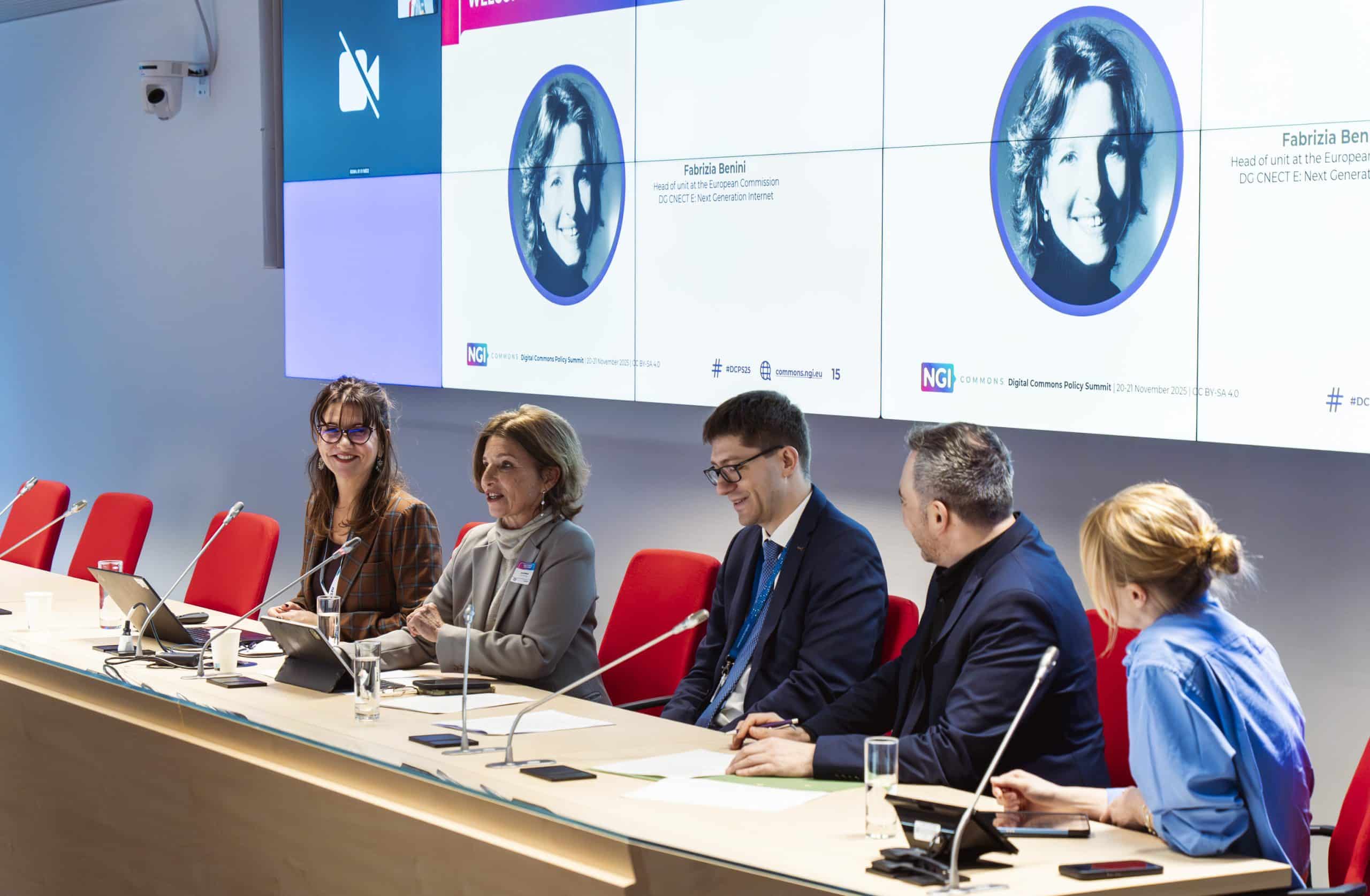
In her opening keynote, Fabrizia Benini, Head of Future Internet at DG CONNECT, announced a major milestone: the Digital Commons EDIC will be officially launched on 11 December 2025. Designed to provide long-term stability and coordination across Member States, the EDIC was widely acknowledged as a central mechanism for turning Europe’s Digital Commons ambitions into operational reality.
Fabrizia Benini stressed that Digital Commons are “essential infrastructure” for Europe’s technological autonomy and competitiveness. She also announced two new initiatives set to reshape the public-sector technology landscape: an EU Open Source Strategy and an Open Source Procurement Office, both aimed at removing procurement barriers and strengthening institutional trust.
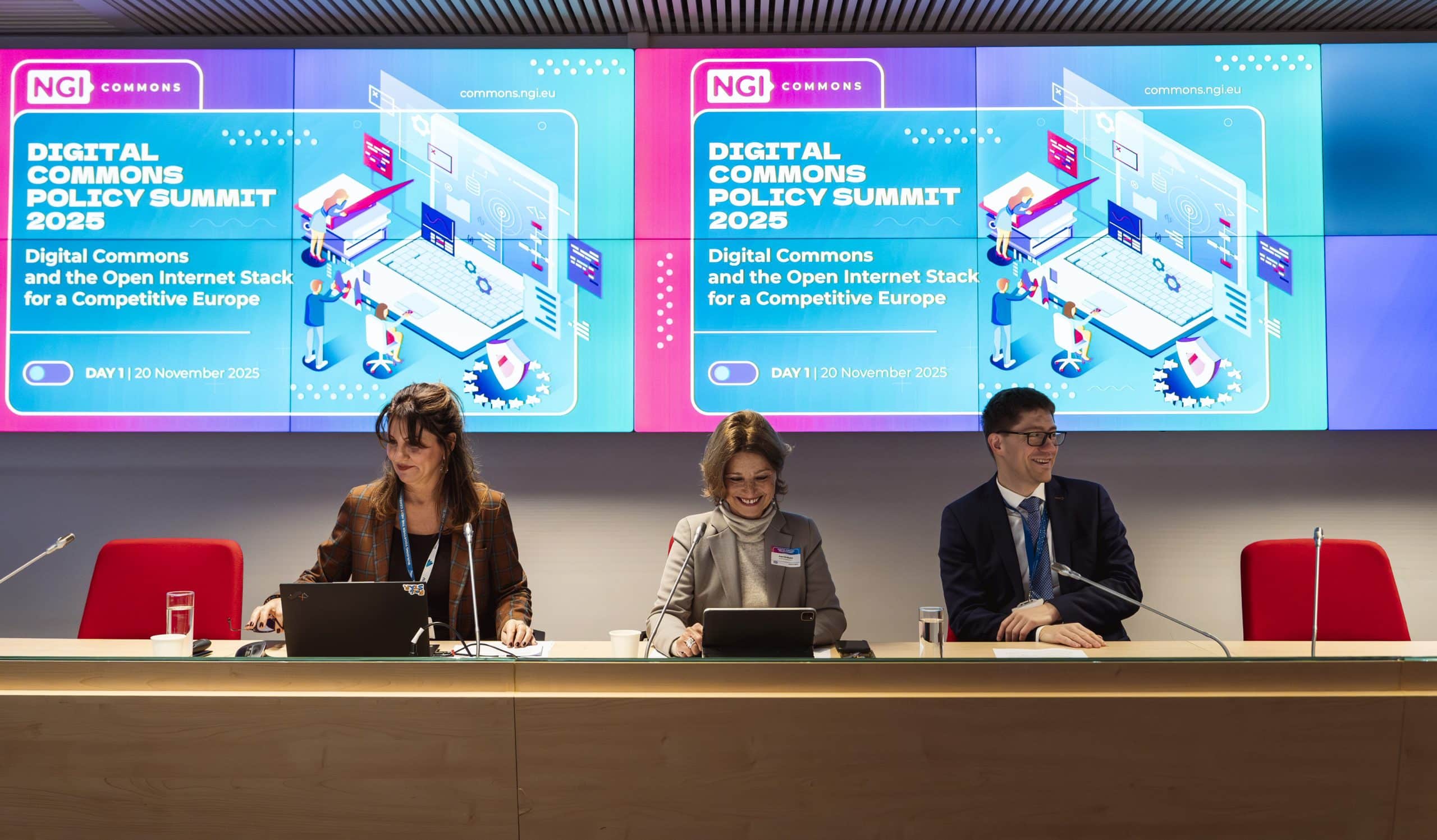
Sovereignty Through Cooperation and Strategic Investment
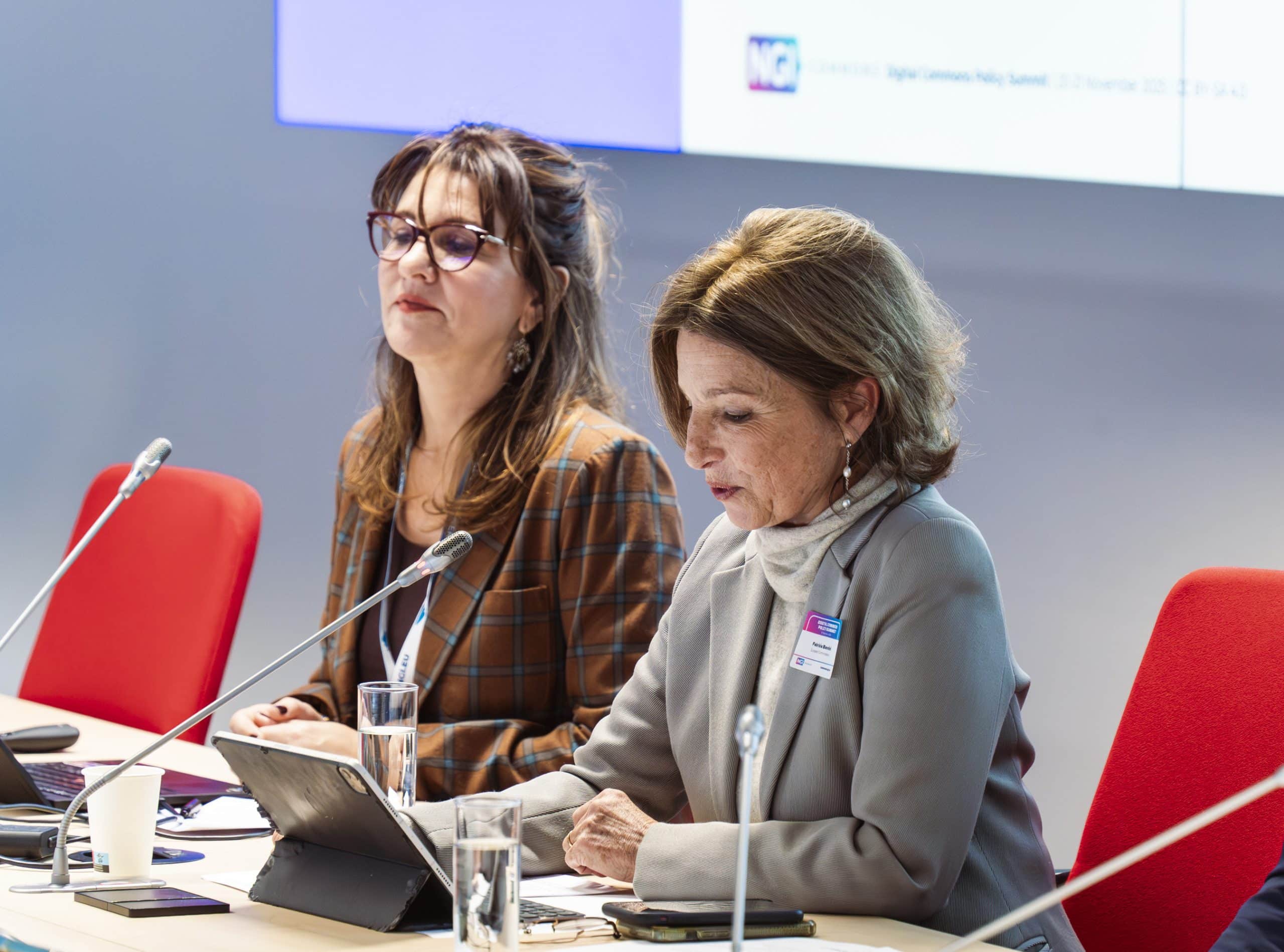
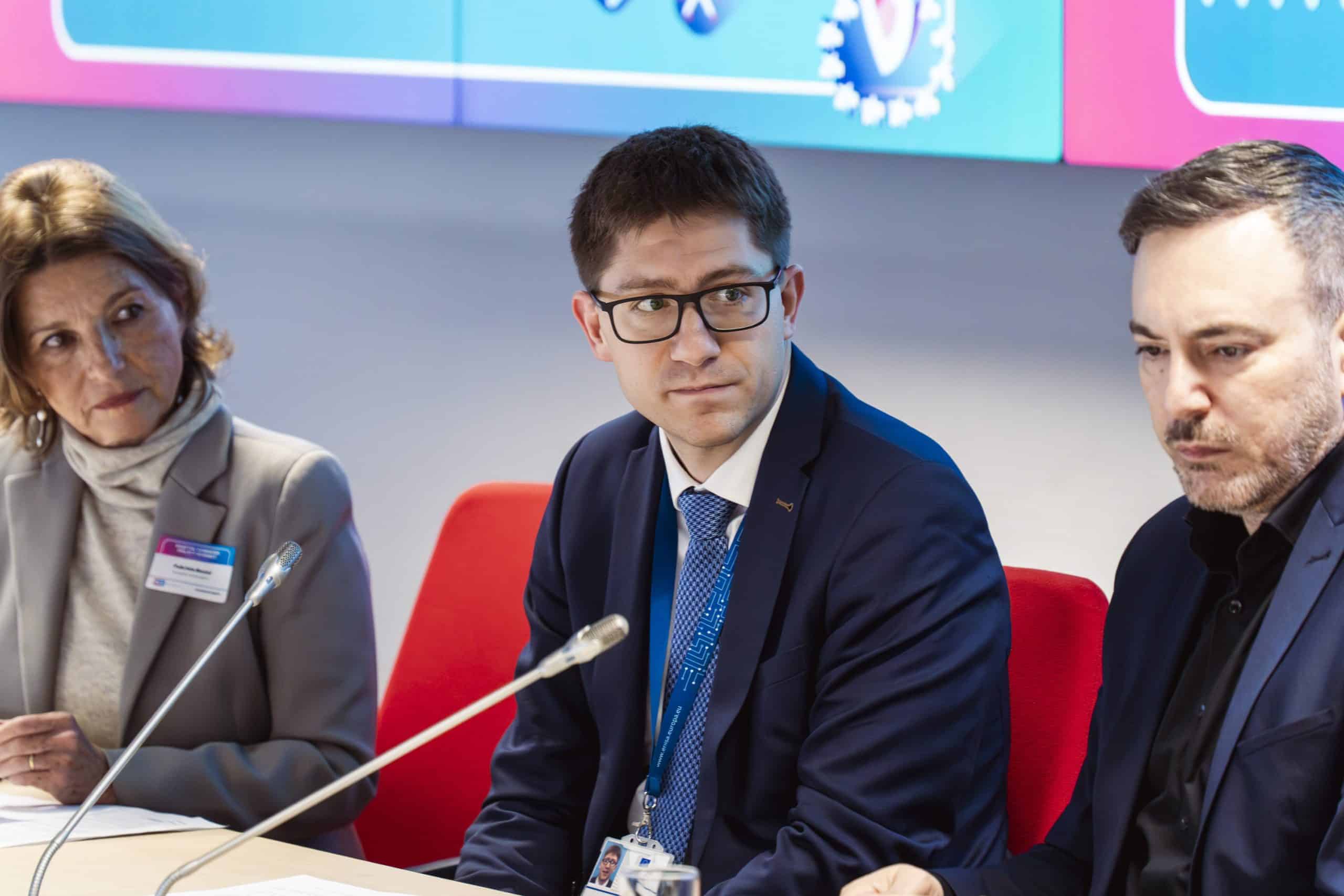
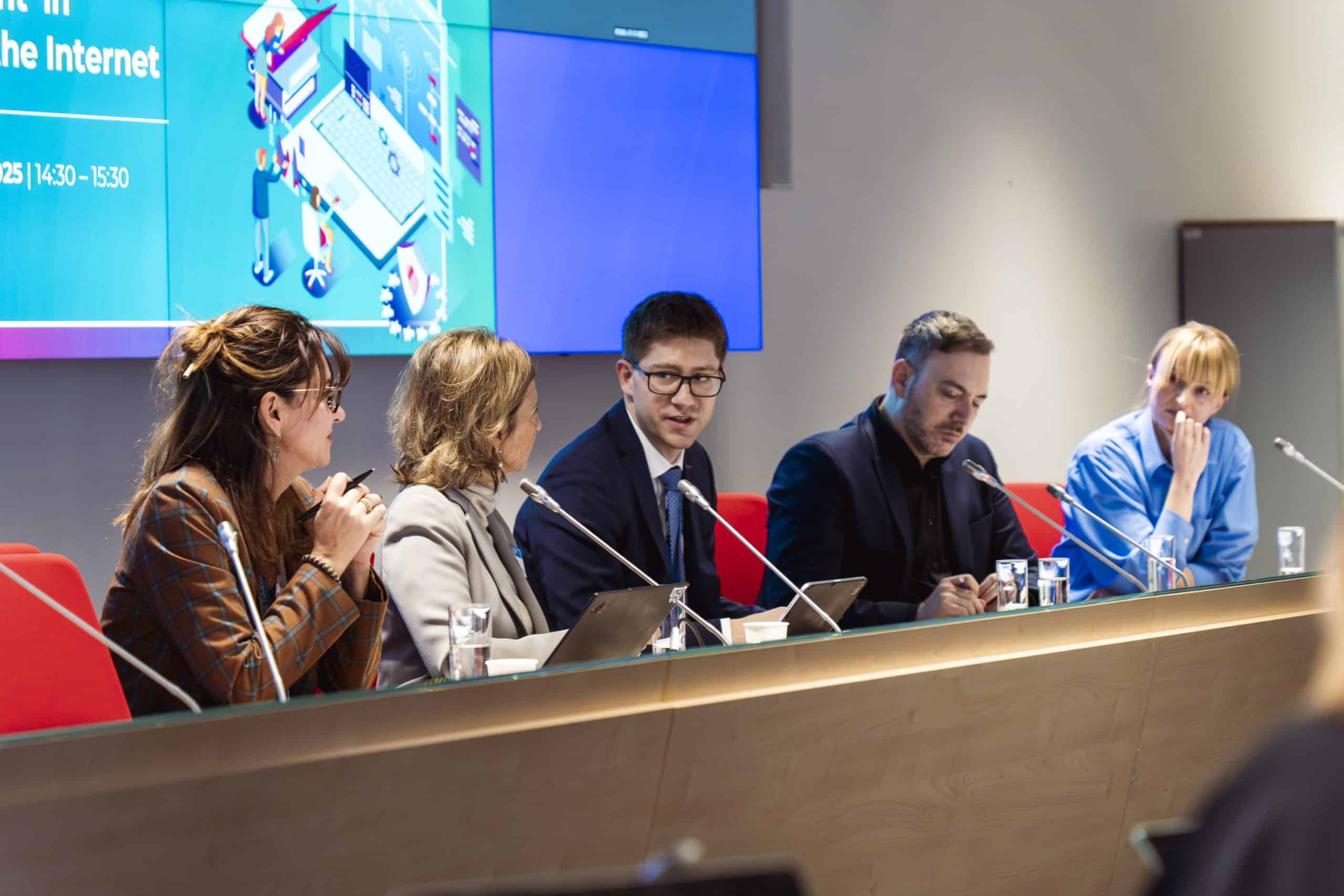
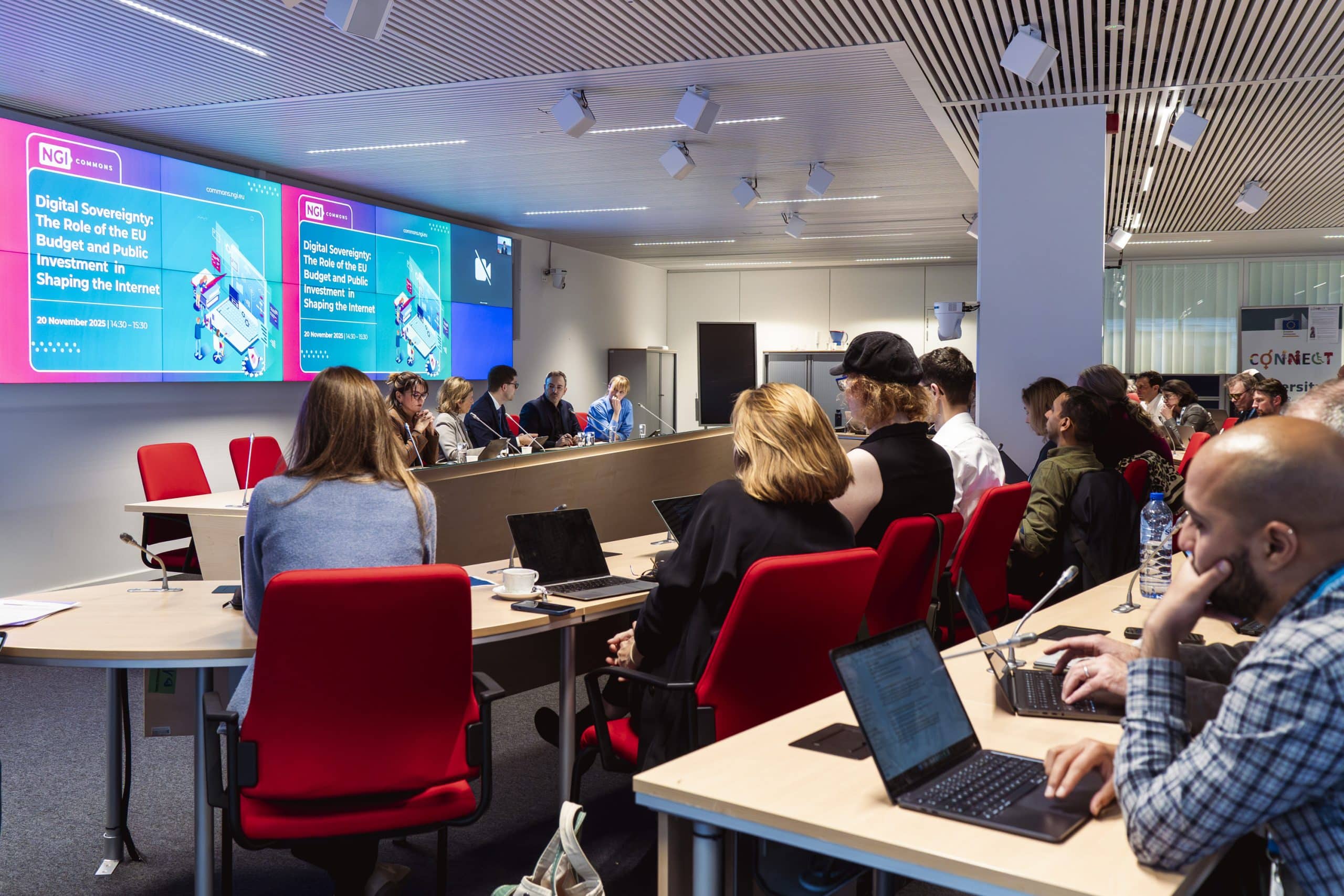
A high-level panel on digital sovereignty highlighted the EU budget and procurement policy as decisive levers for strategic autonomy.
- Benjamin Bögel (Cabinet of EVP Henna Virkkunen) pointed to Europe’s structural dependencies and introduced the EU’s largest-ever tender for a sovereign cloud as a model for future coordinated procurement.
- Dr Sergey Lagodinsky, Member of the European Parliament, called for clear prioritisation, transparent resource allocation, and democratic governance to ensure that Digital Commons become engines of both sovereignty and democratic innovation.
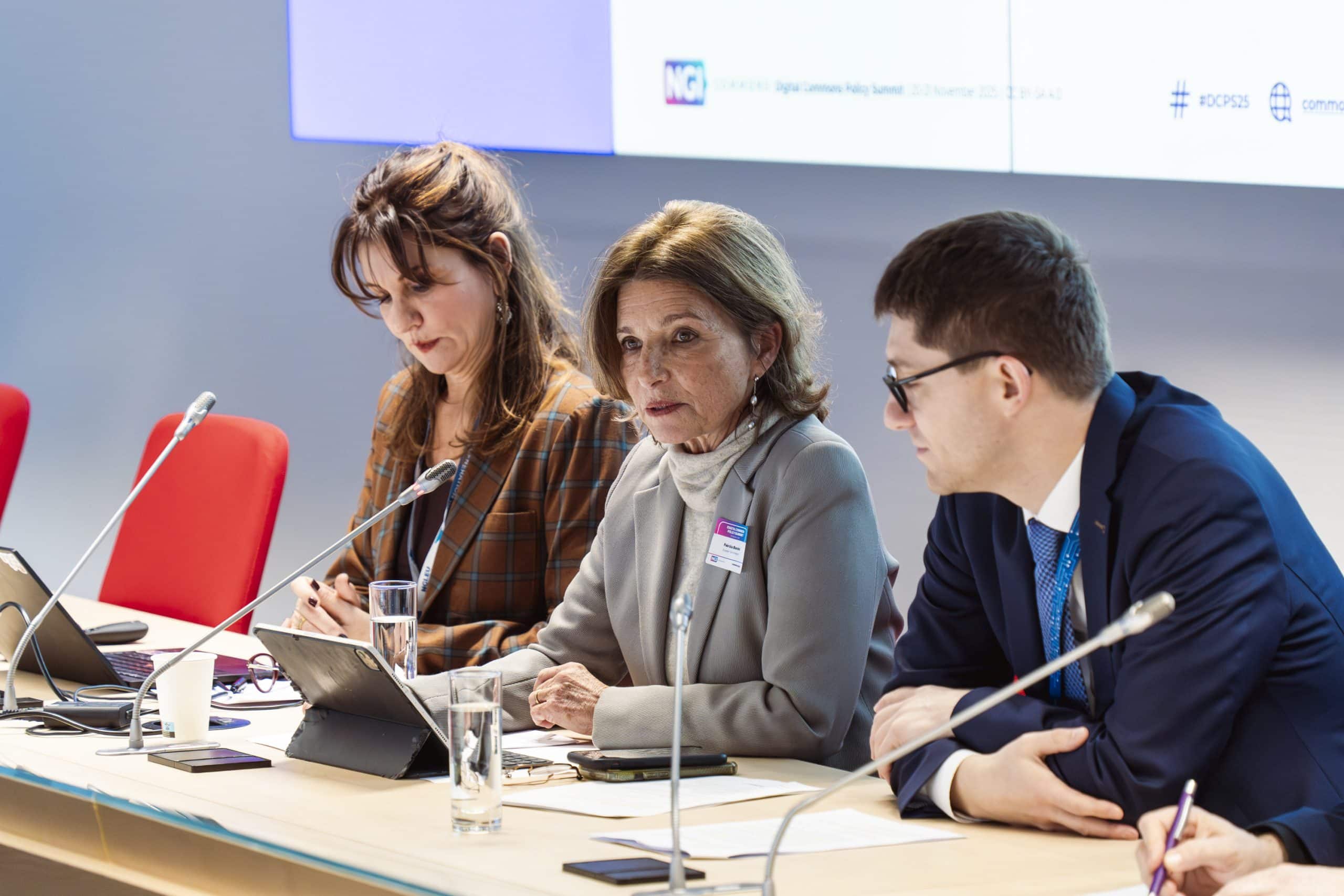
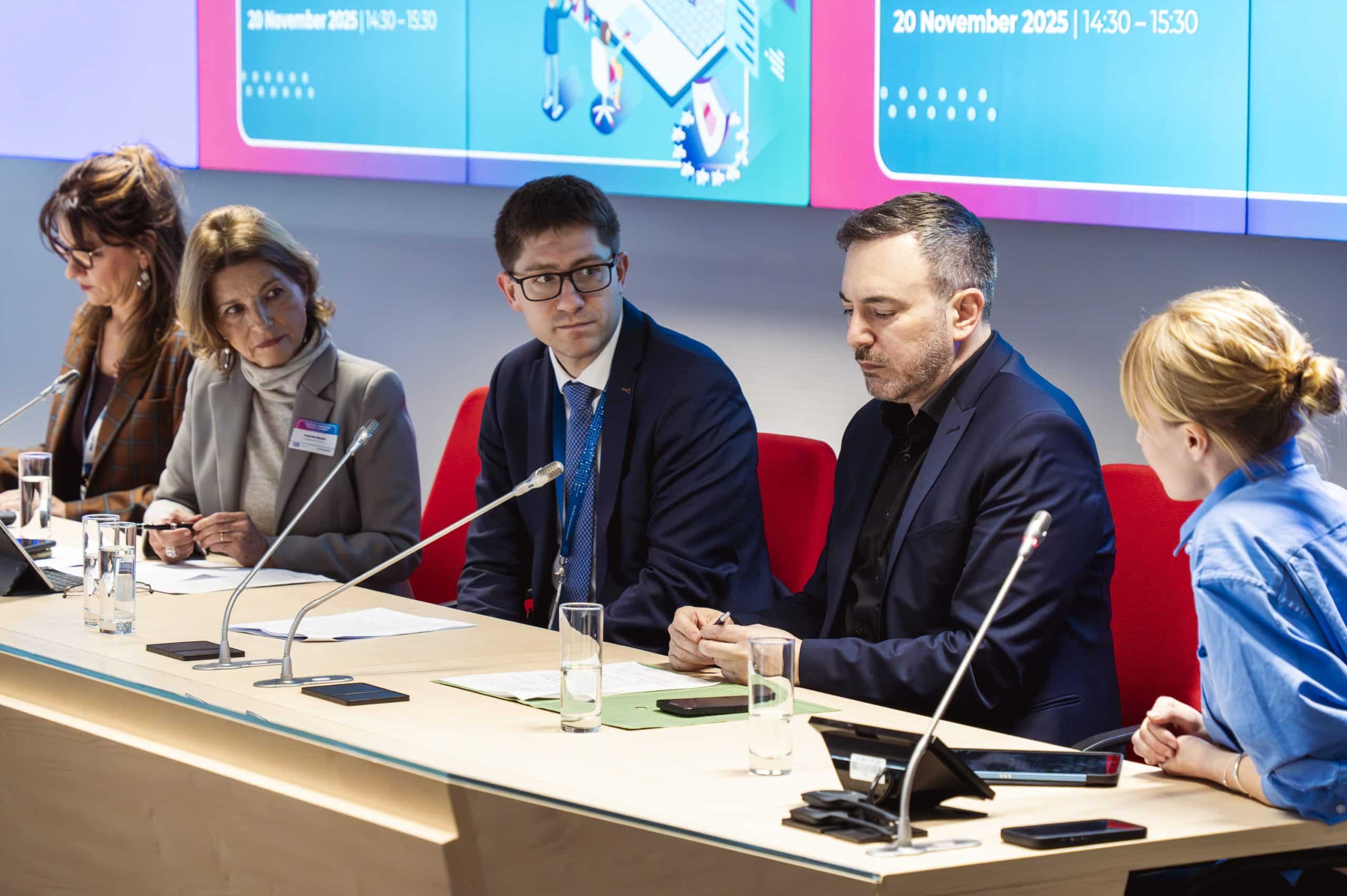
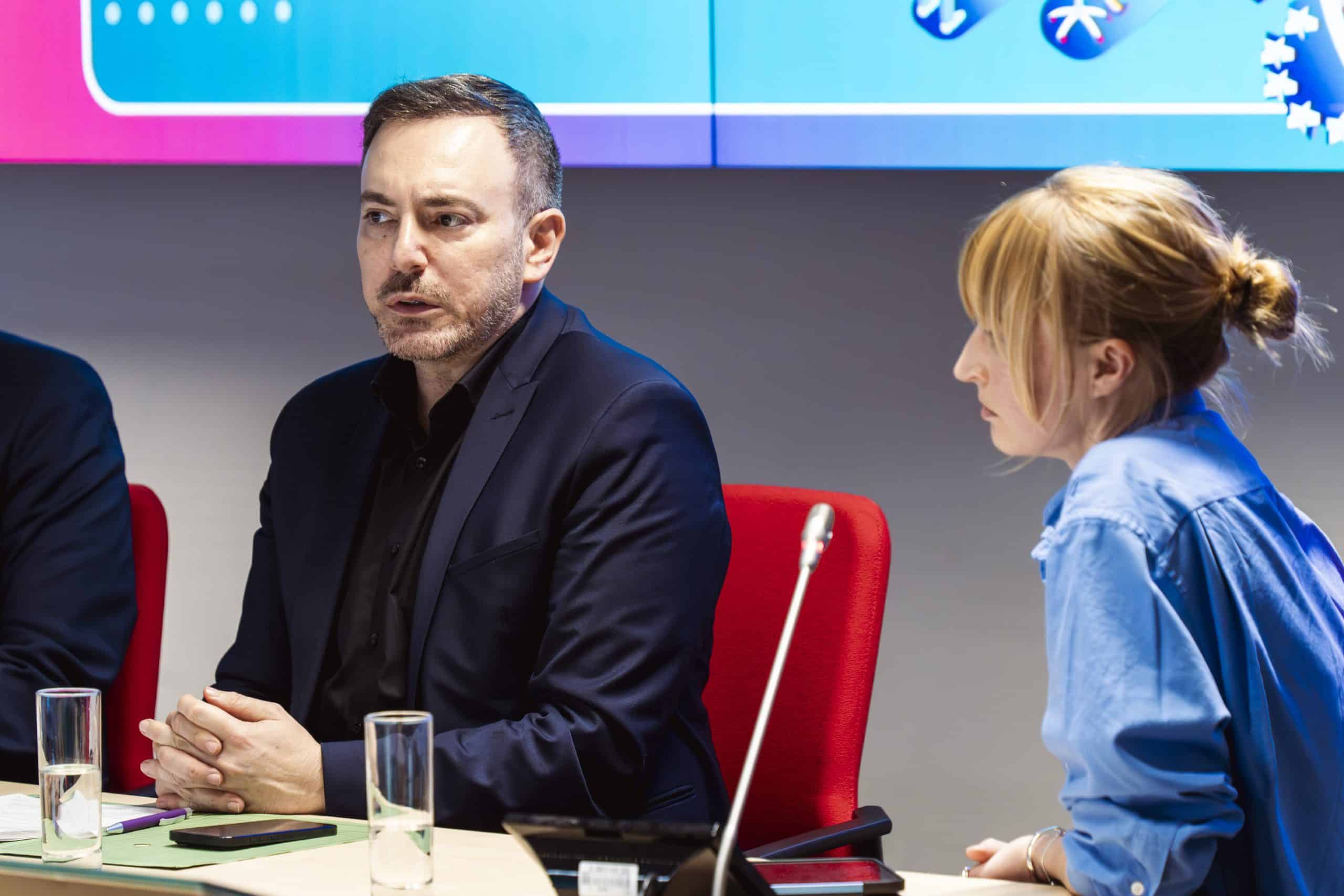
Operationalising the Digital Commons EDIC: Member States in the Driving Seat
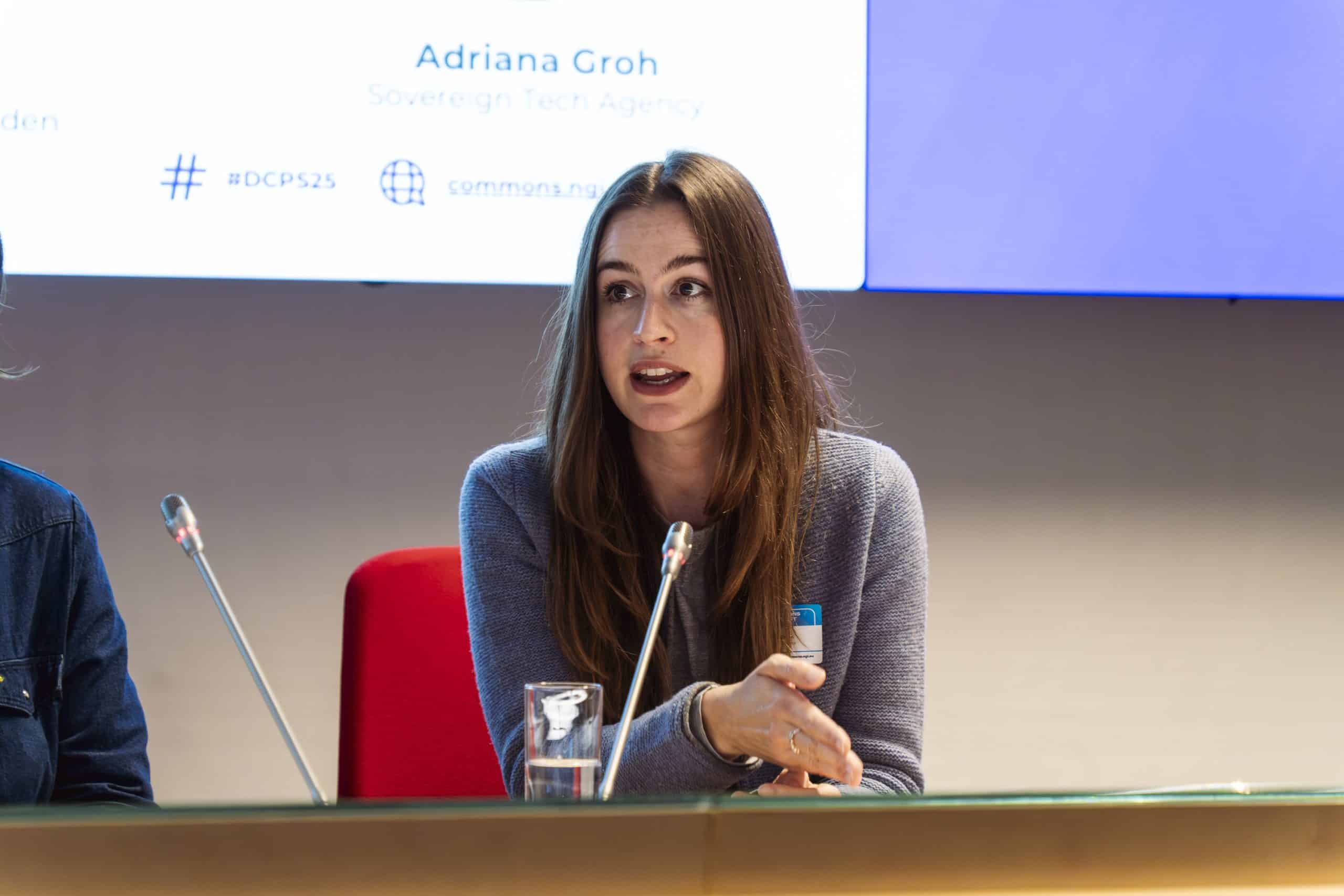
Europe must put its money where its mouth is.
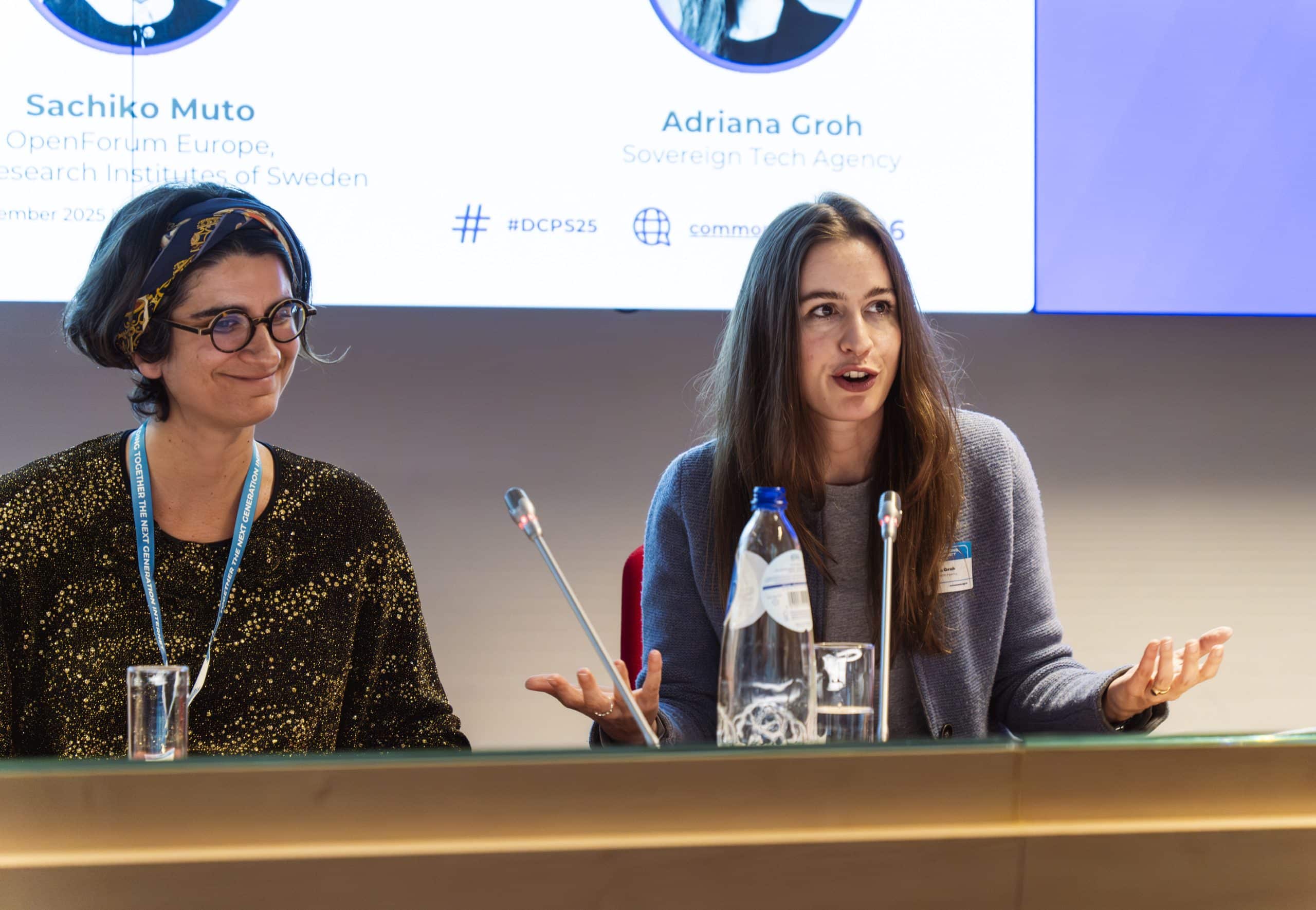
Adriana Groh, Sovereign Tech Agency
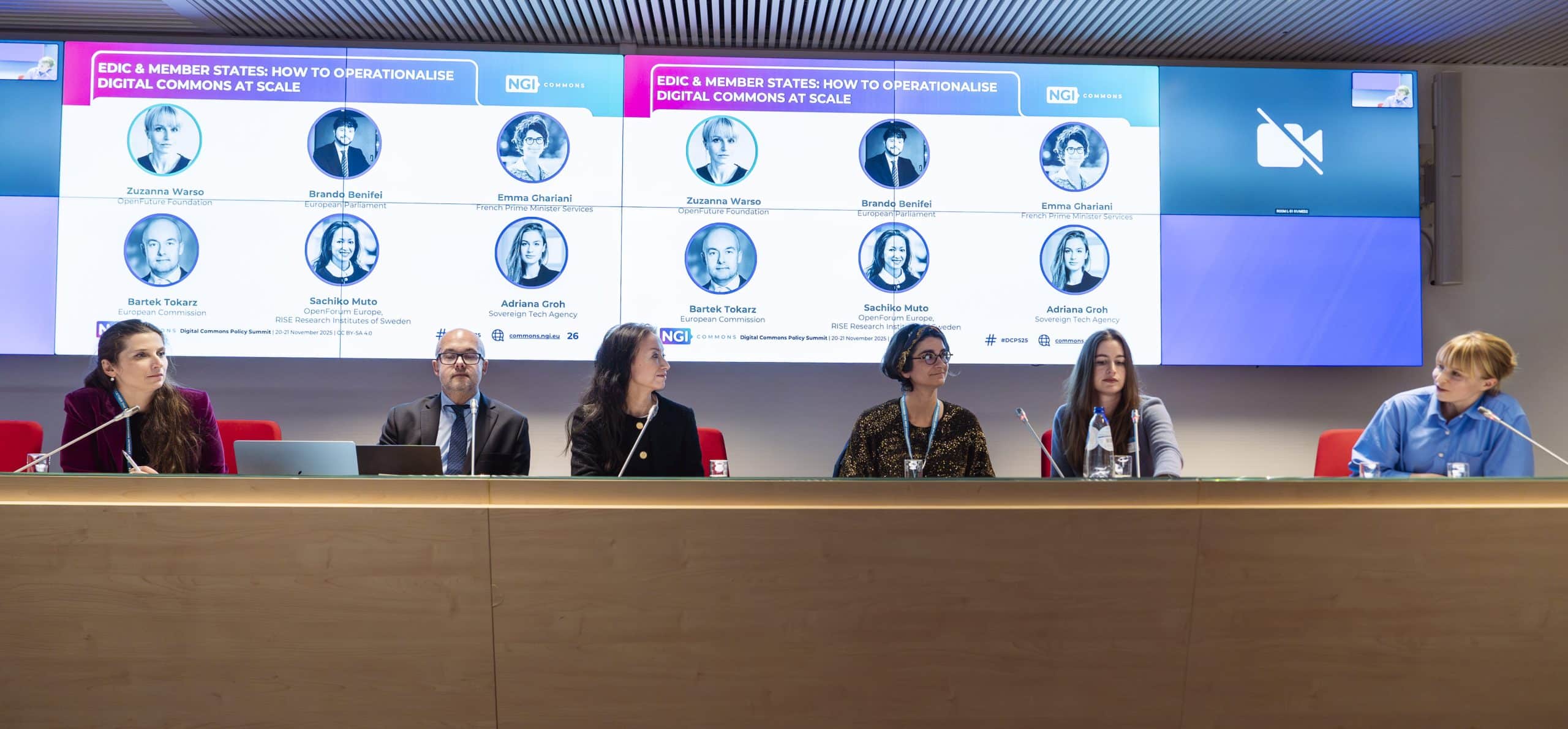
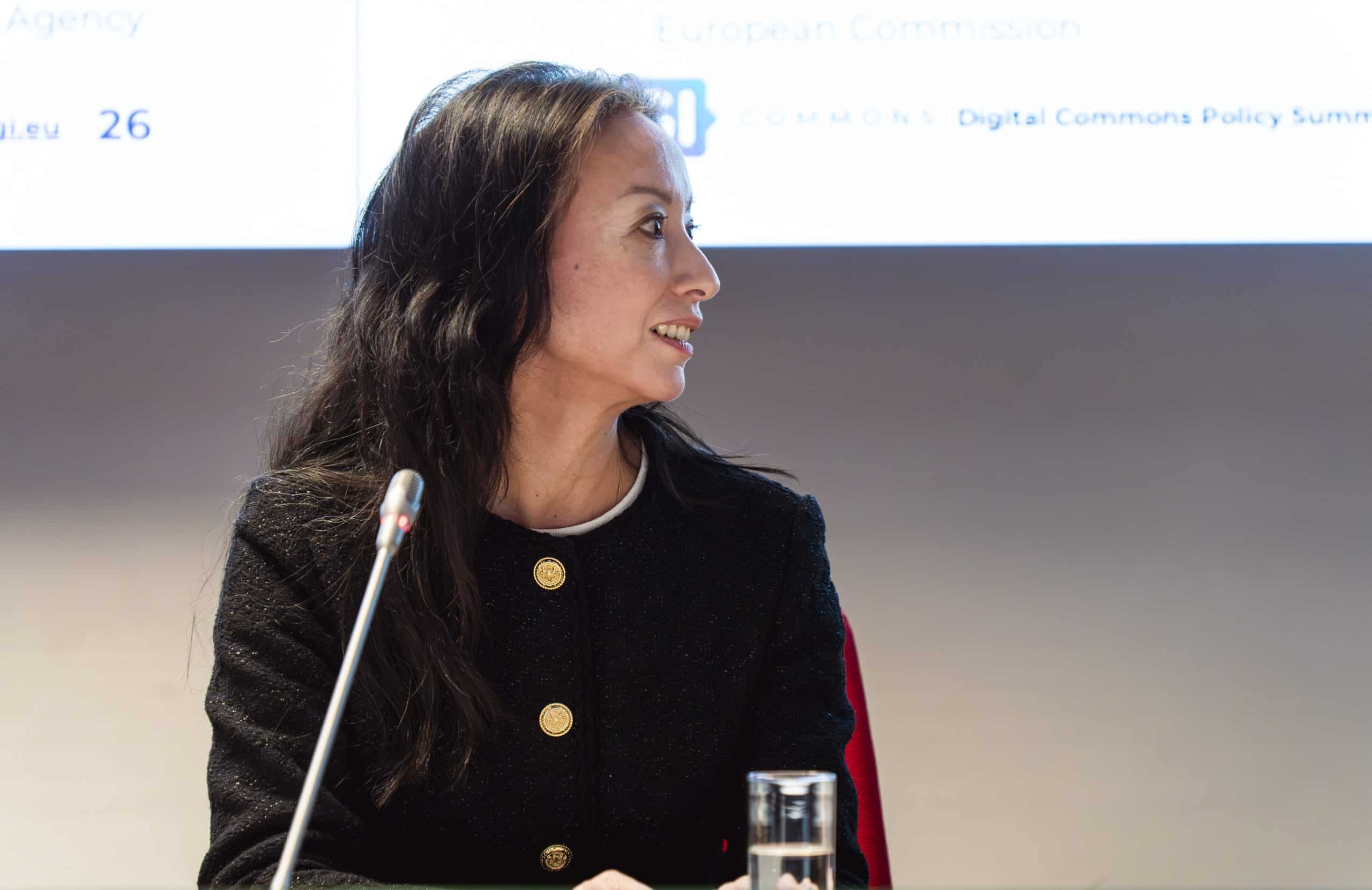
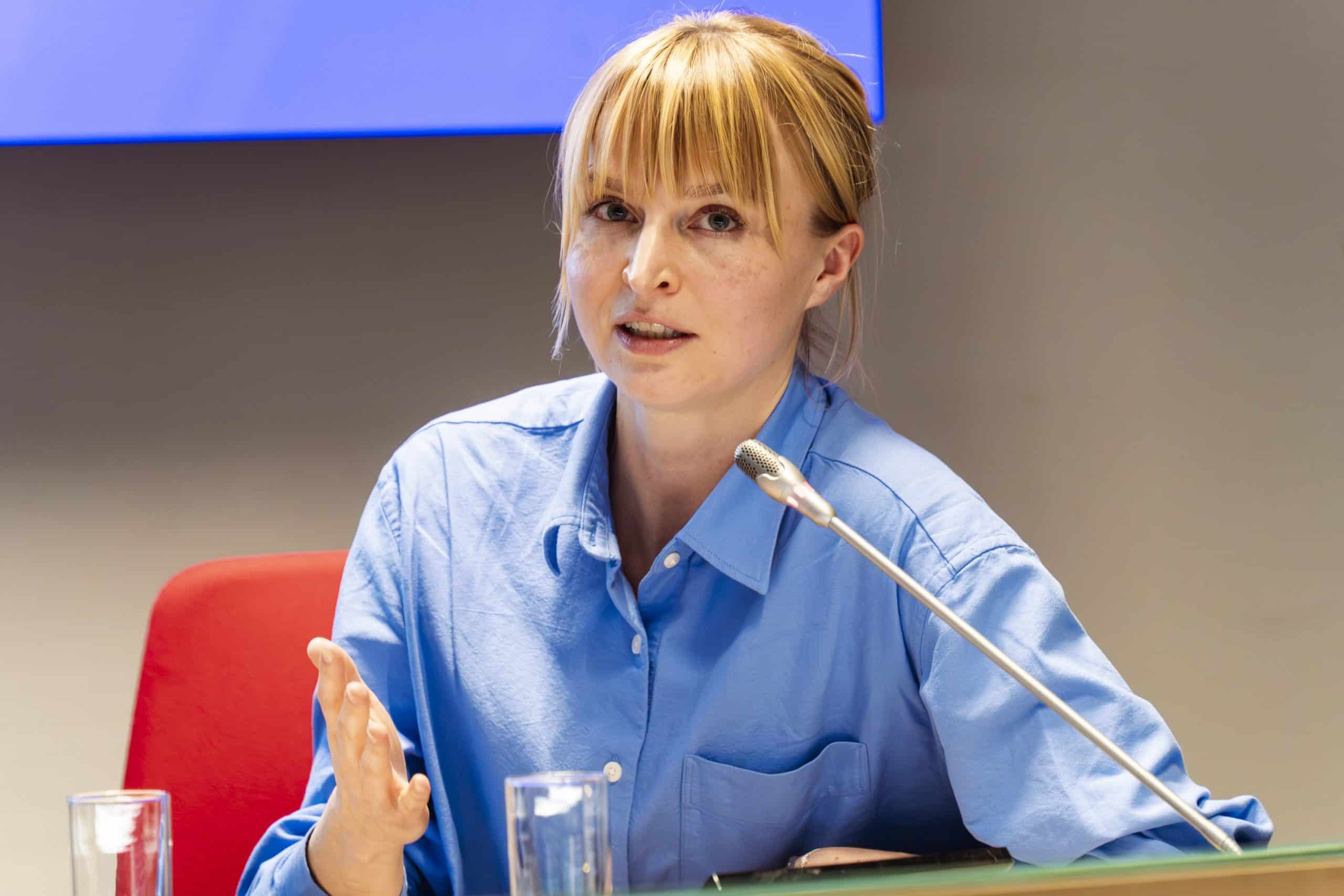
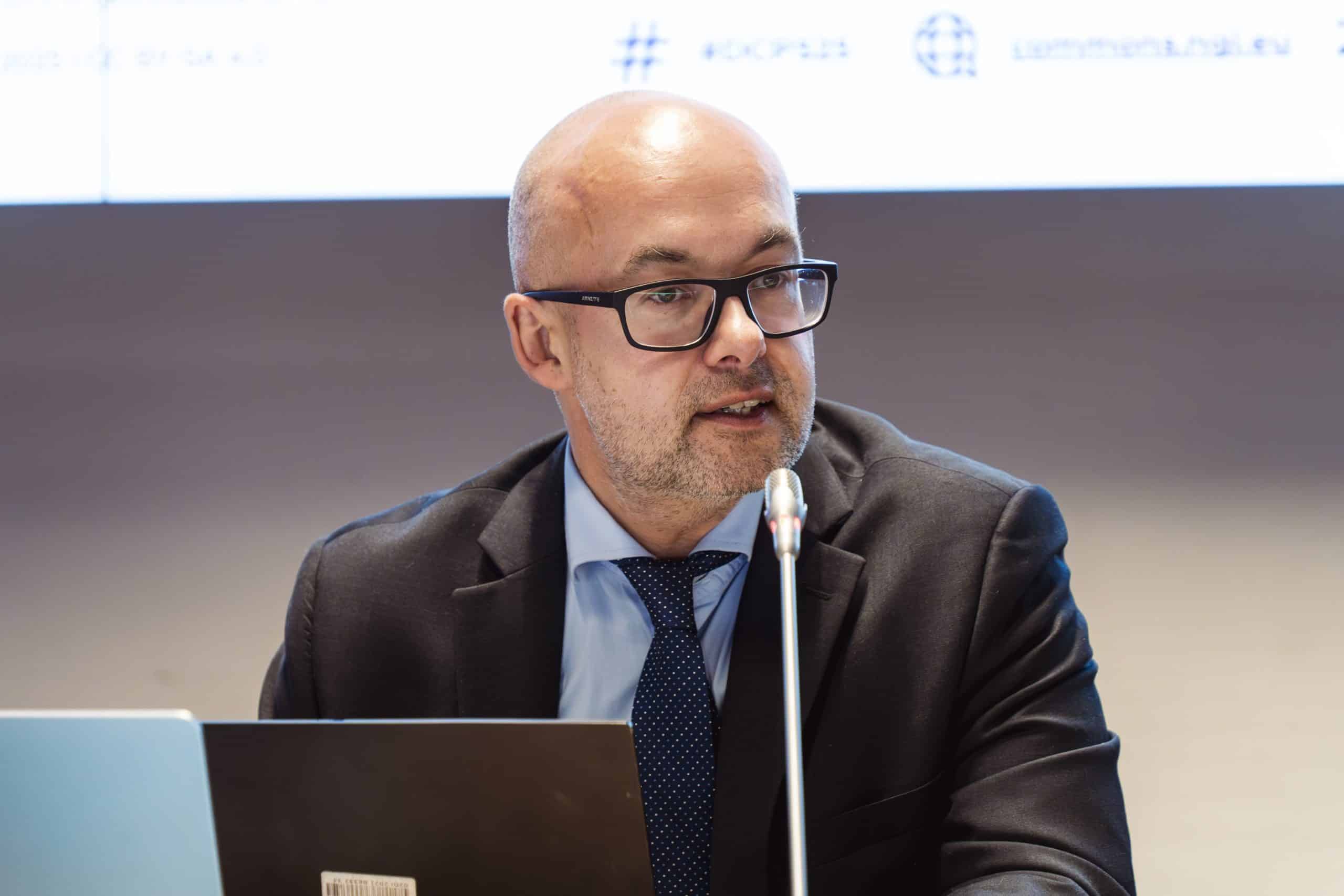
Representatives from France, the European Commission, civil society, and implementing agencies explored how the EDIC can scale Digital Commons across Europe:
- Emma Ghariani (French Prime Minister Services) stressed the need for agility and results-driven implementation, noting that public buyers need guarantees, support mechanisms, and confidence that open-source solutions “just work”.
- Bartek Tokarz (European Commission) clarified that Member States — not the Commission — hold the voting power, ensuring national ownership and long-term continuity.
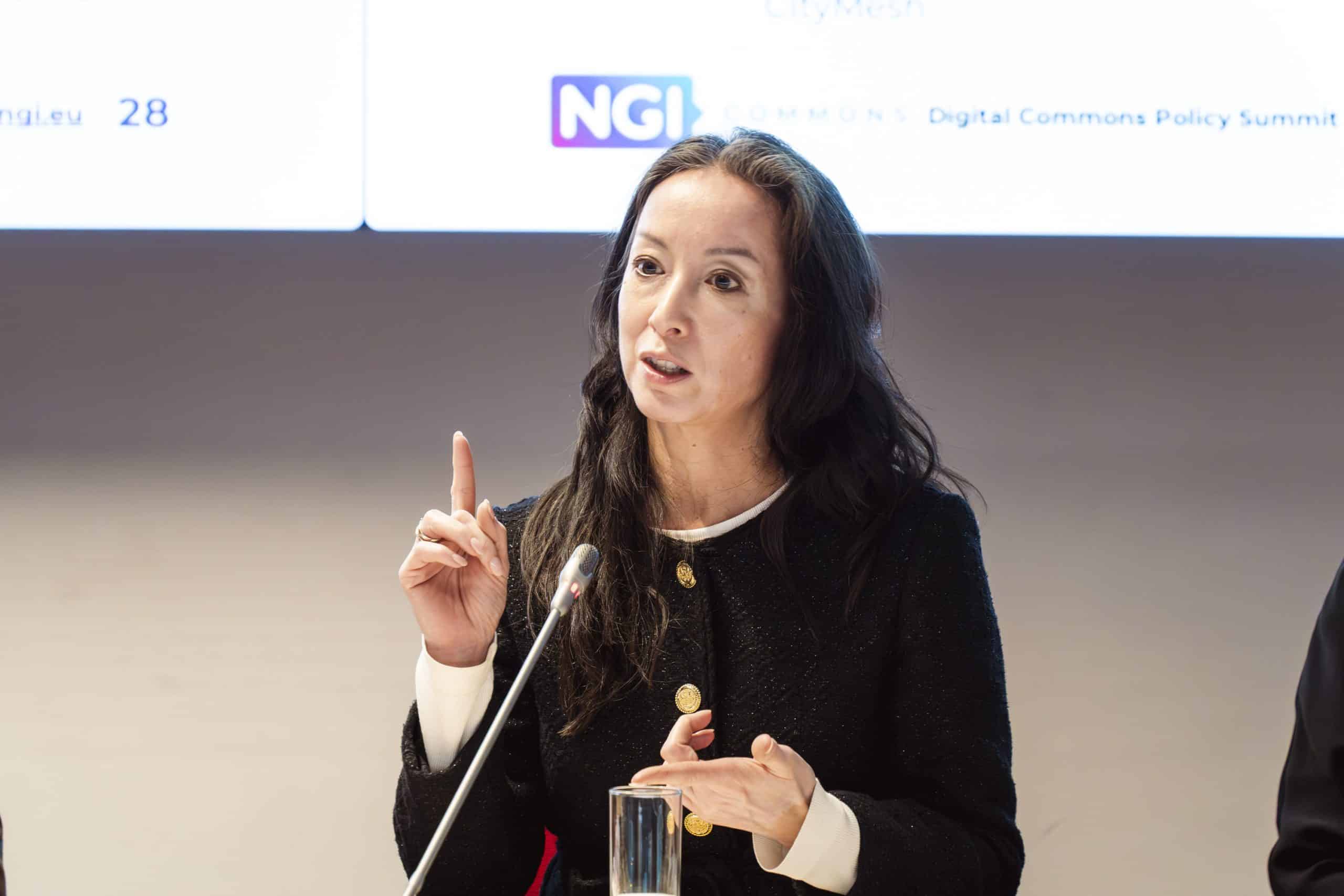
- Sachiko Muto (OpenForum Europe) highlighted procurement reform as a game-changer and urged learning from successful models like Estonia’s X-Road.
- Adriana Groh (Sovereign Tech Agency) emphasised open source as “the ideal EDIC domain” and called for major investment to match political ambition: “Europe must put its money where its mouth is.”
Open Internet Stack: Digital Commons as the Foundation
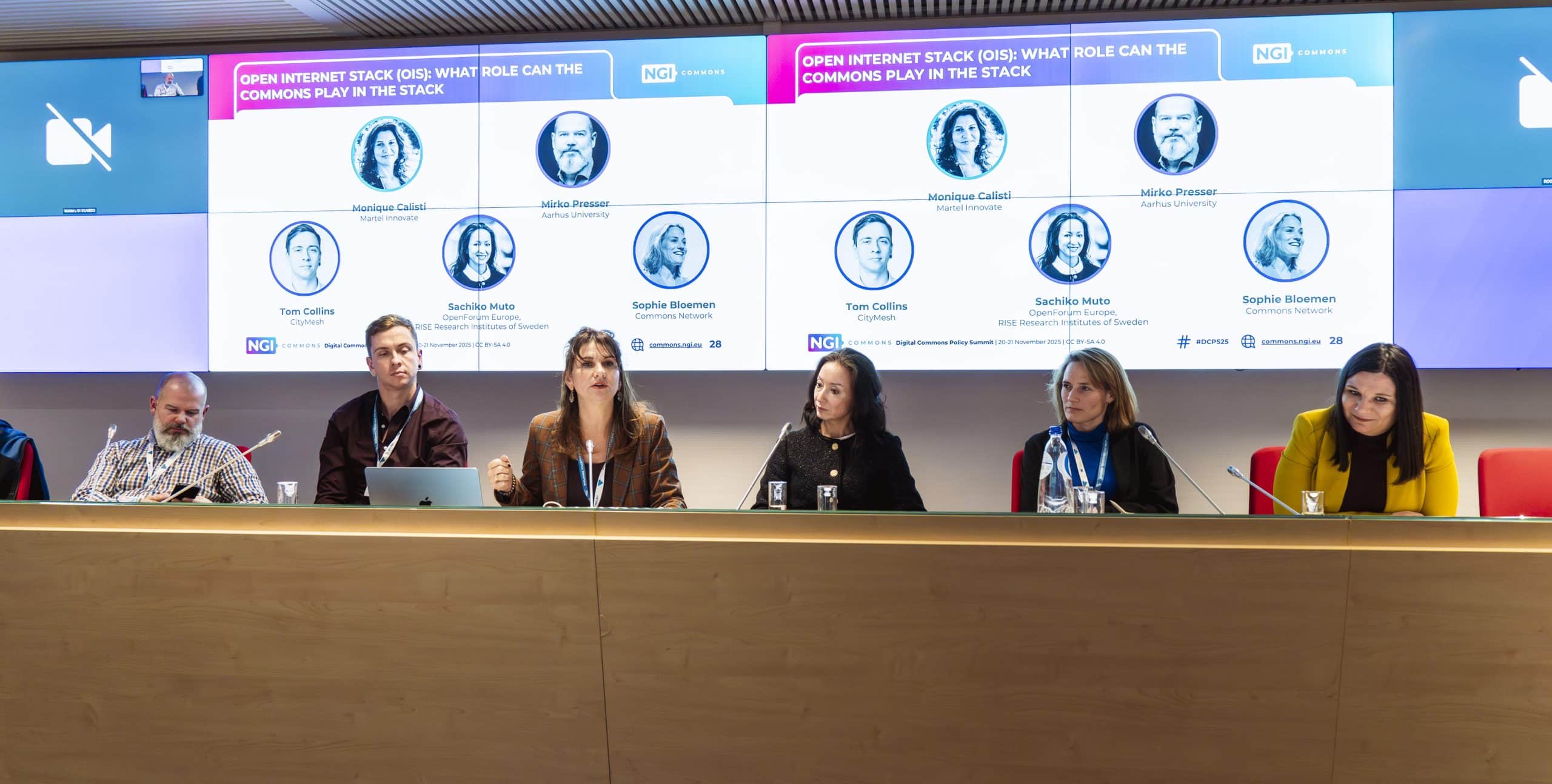
There can be no Open Internet Stack without Digital Commons.
Gemma Carollilo, European Commission -DG CONNECT
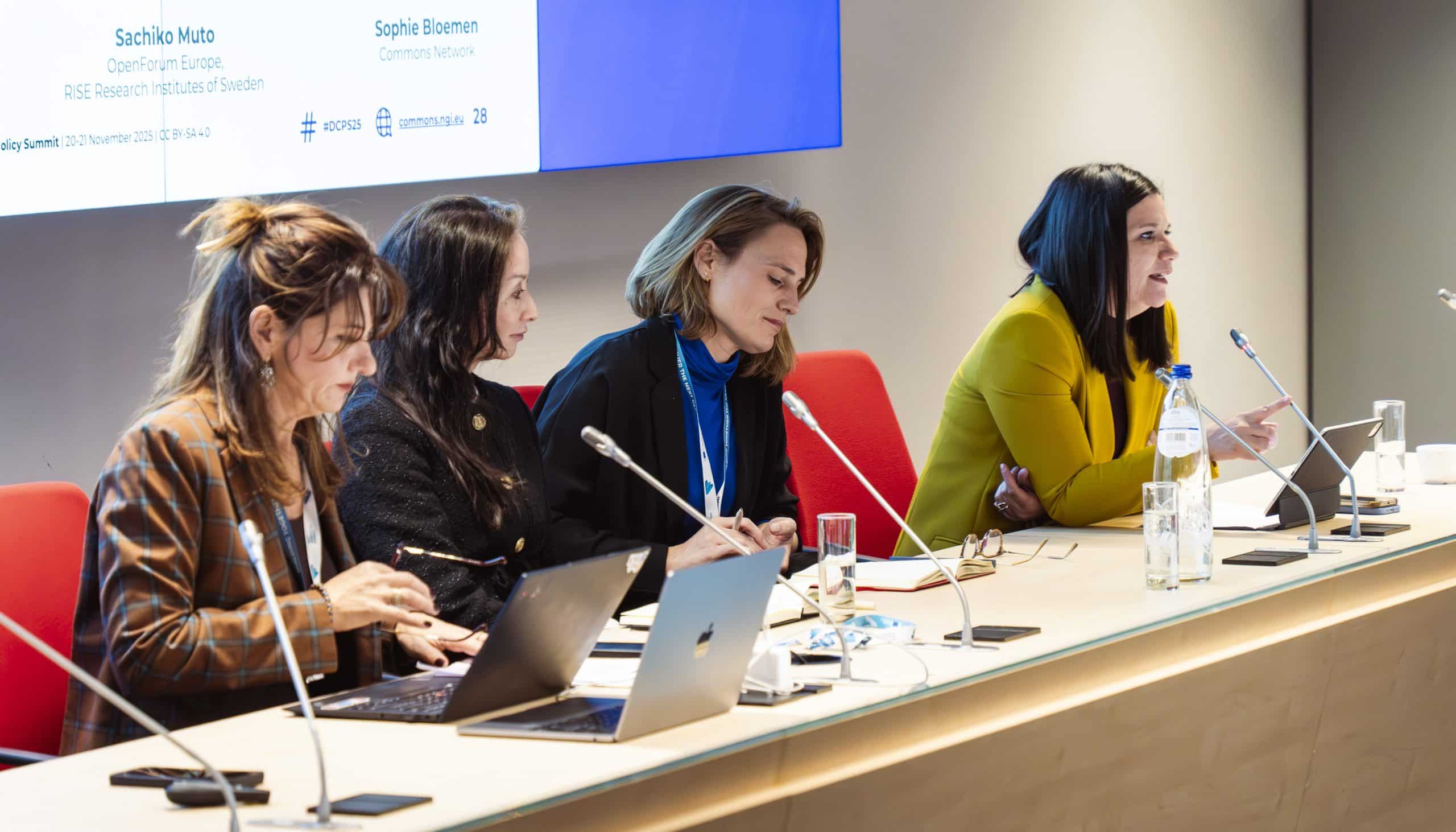
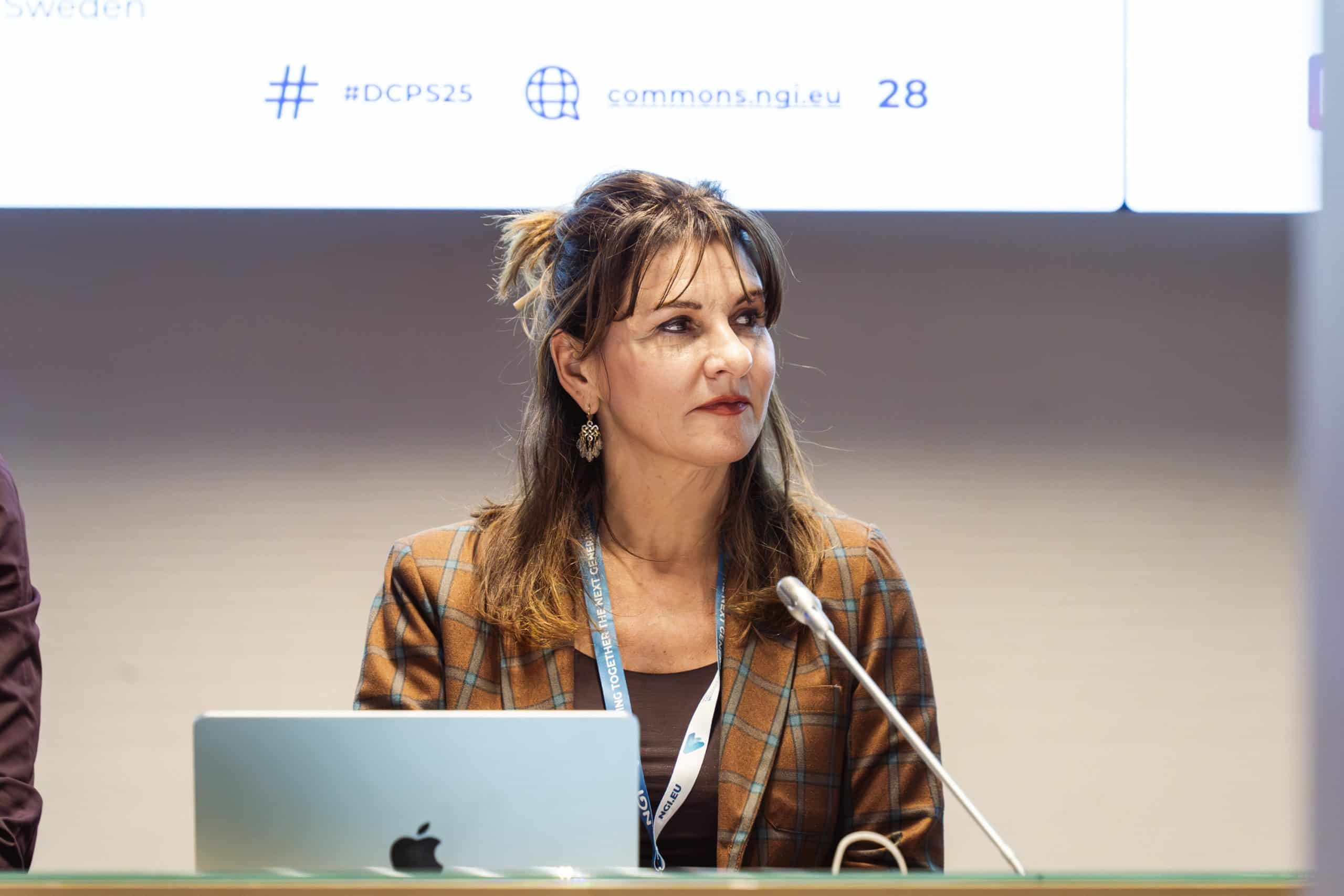
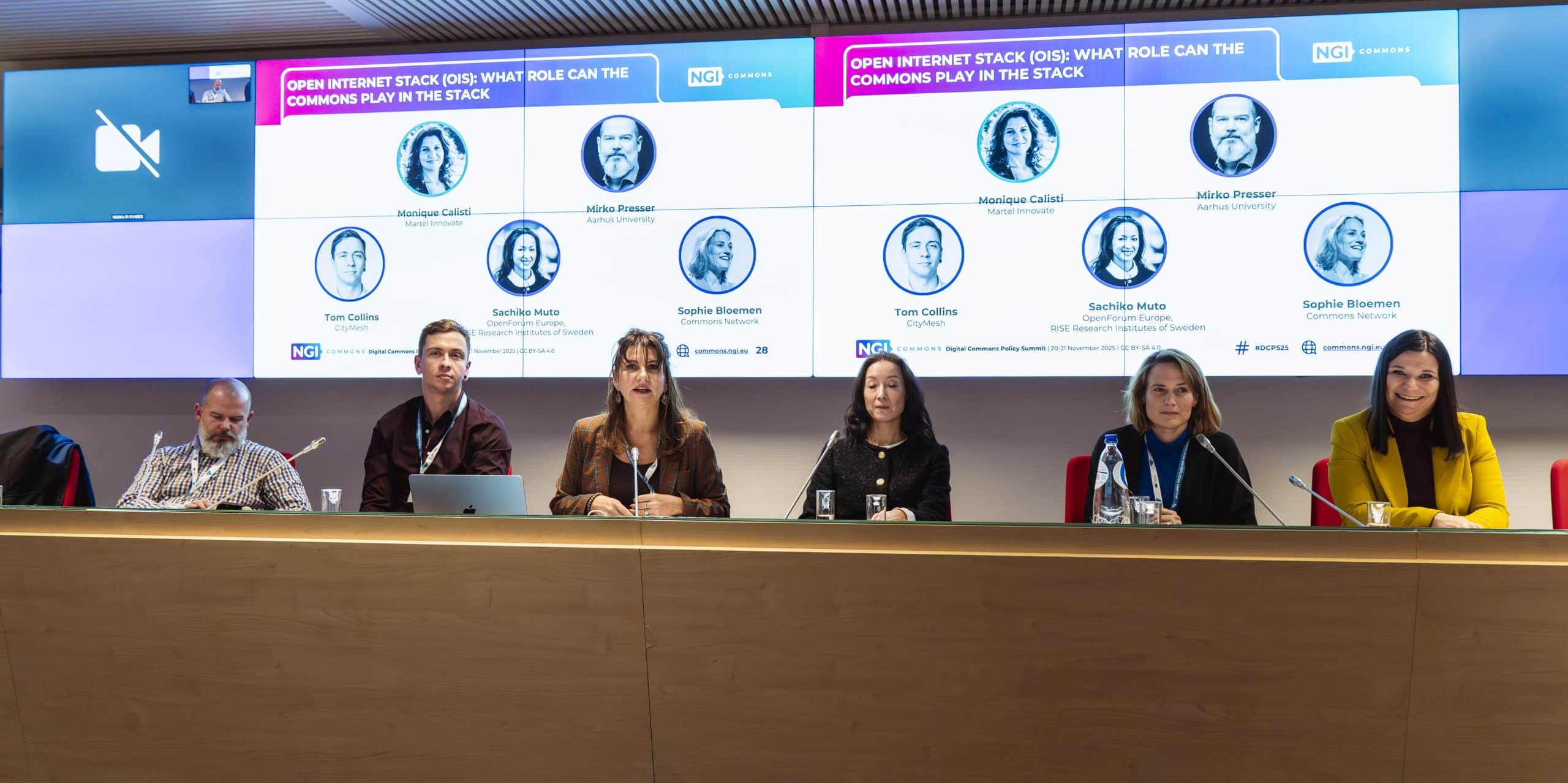
In a session moderated by Dr Monique Calisti, experts analysed the role of the Open Internet Stack (OIS) in advancing a commons-based digital infrastructure. Speakers highlighted the need for cultural change, sustainable governance models, and rigorous quality assurance:
- Mirko Presser (Aarhus University) pointed to NGI-funded projects like the Open Web Index as existing yet undervalued critical infrastructure.
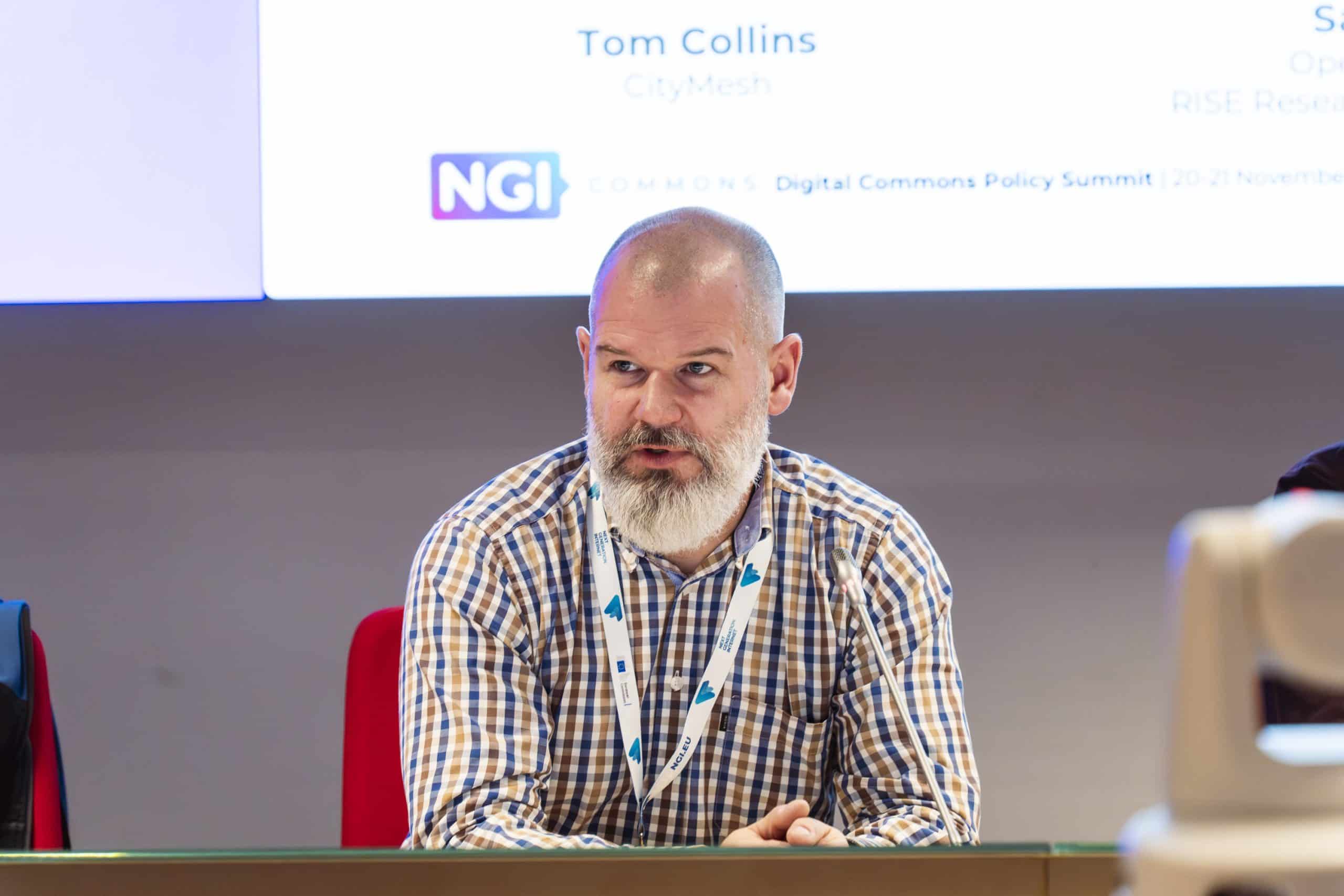
- Tom Collins (CityMesh) underscored the need for trusted catalogues of high-quality open-source solutions and honest reporting of adoption costs.
- Sophie Bloemen (Commons Network) urged broader thinking beyond software to protocols, standards, and democratic data governance.
- Gemma Carollilo (DG CNECT) stated clearly: “There can be no Open Internet Stack without Digital Commons.” She called for certification and assurance frameworks that boost confidence without adding burdensome bureaucracy.
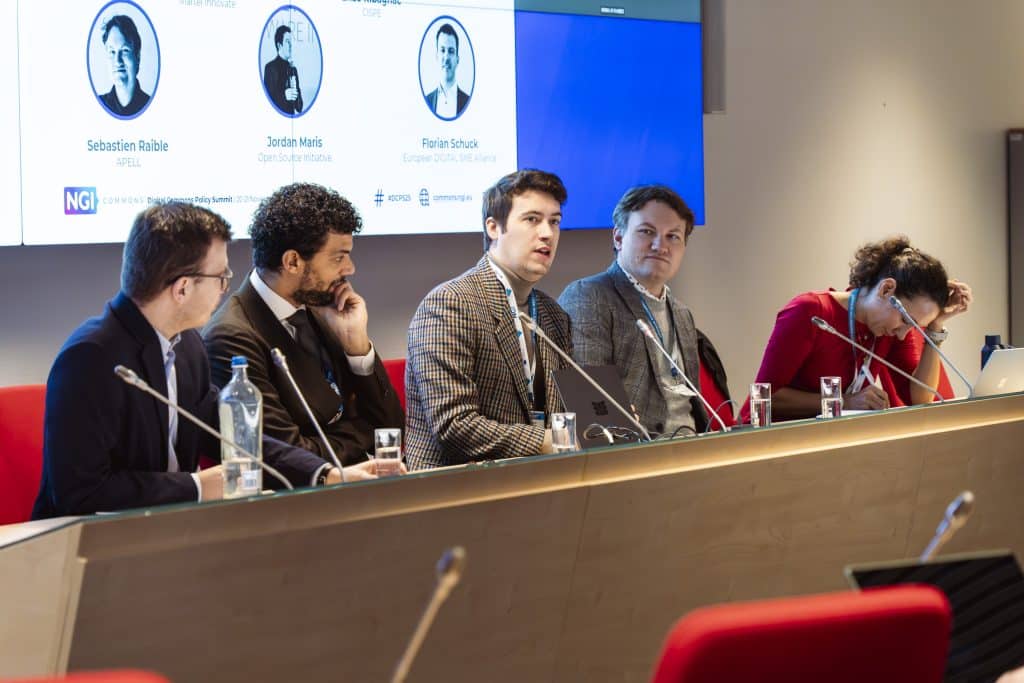
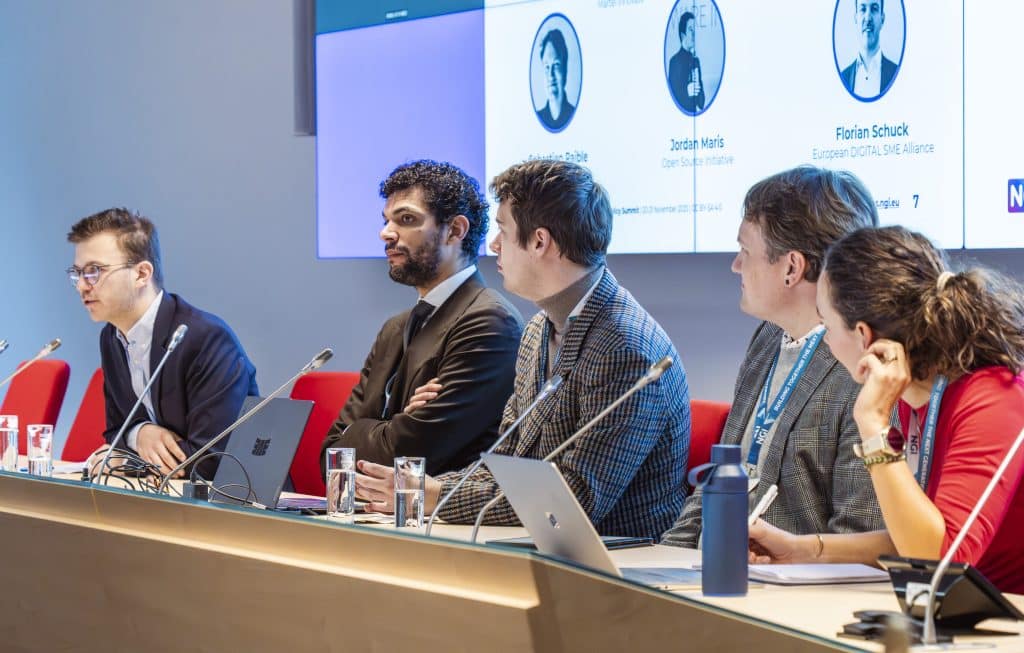
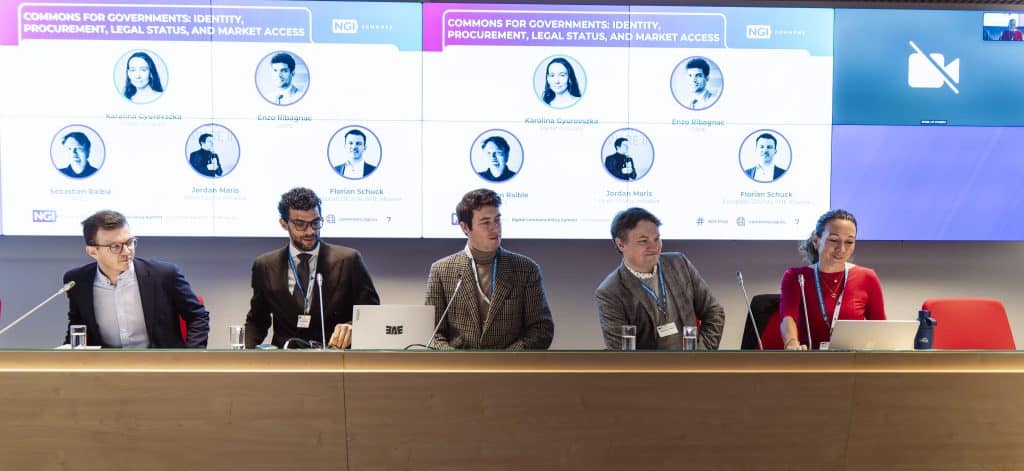
Commons for Governments: Reforming Procurement and Legal Frameworks
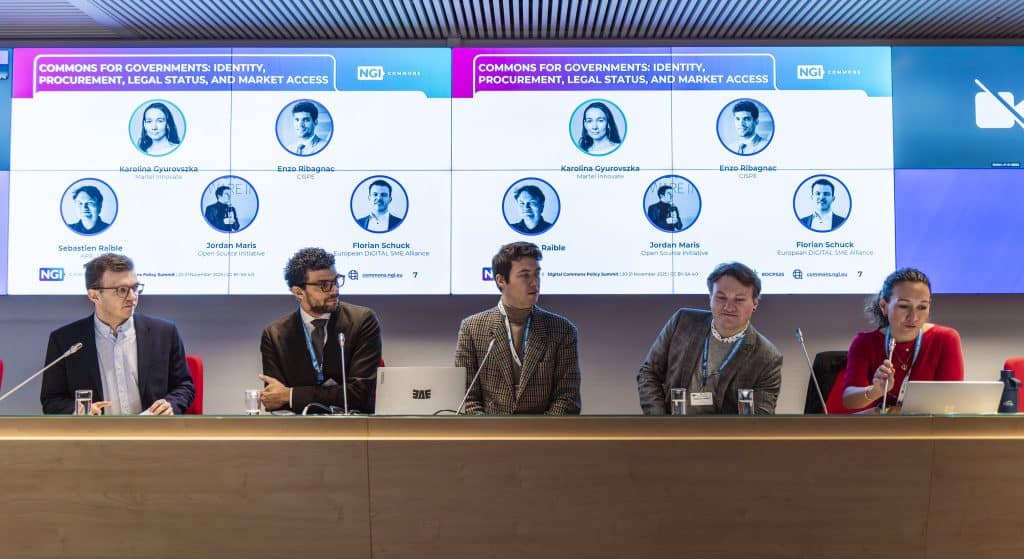
The second day of the gathering started with the topic on procurement. Experts identified a chain of challenges — from rigid rules and risk-averse cultures to lack of training and legacy lock-in. Key recommendations included:
- prohibiting vendor-dependent technical requirements;
- prioritising interoperability and federated architectures;
- strengthening liability clarity for open-source components;
- enabling “European preference” criteria for strategic infrastructure;
- simplifying procurement procedures and guidance.
Speakers agreed that procurement reform must go hand in hand with cultural change: public-sector trust in open source must be actively built and supported.
What Digital Commons Projects Need to Thrive
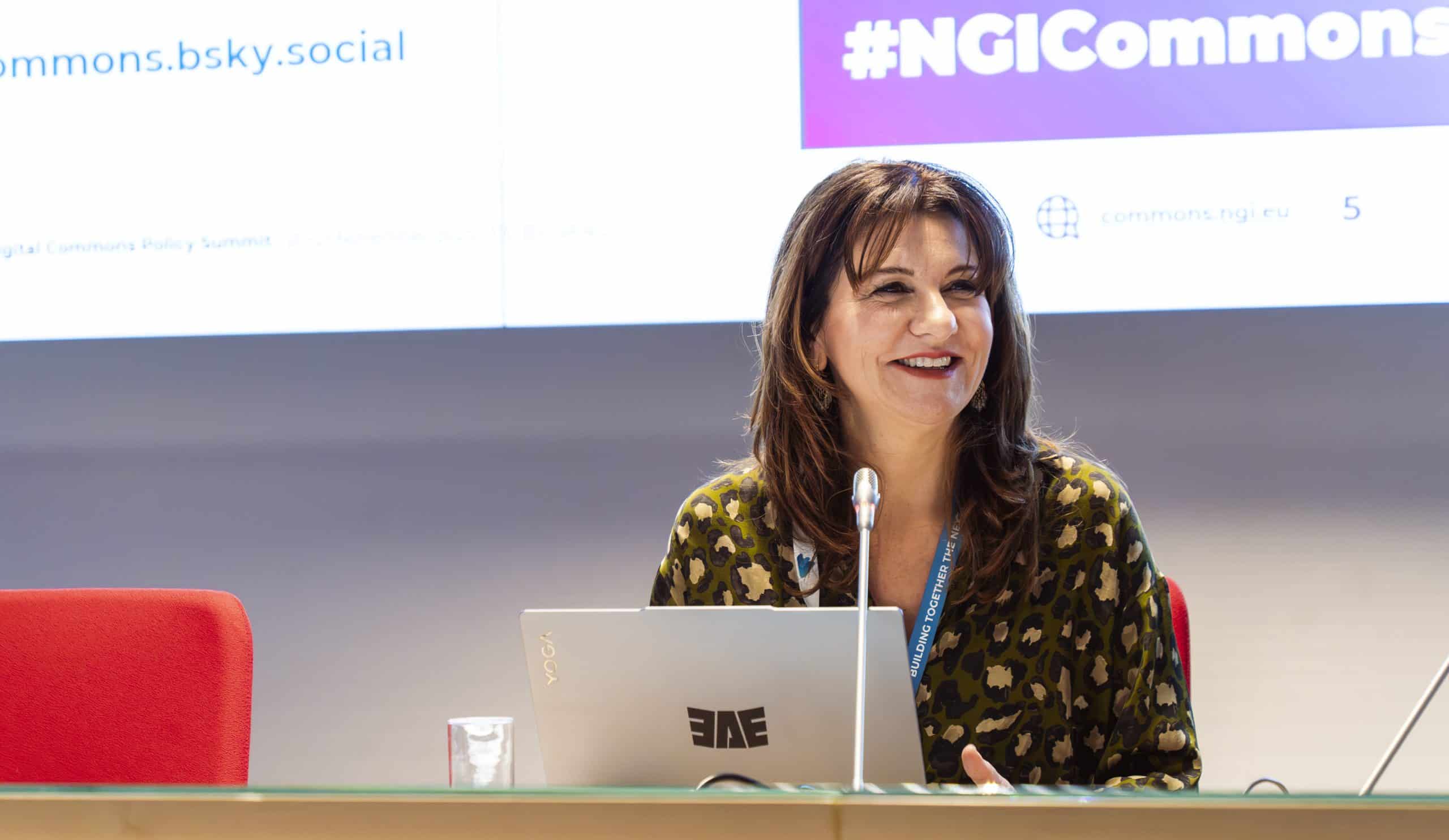
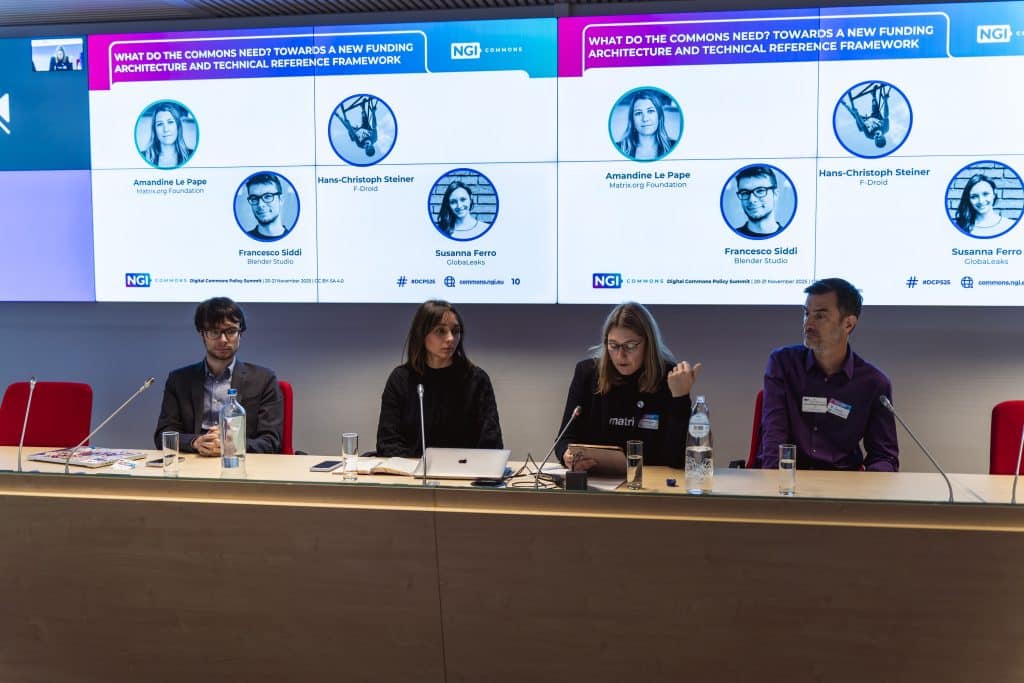
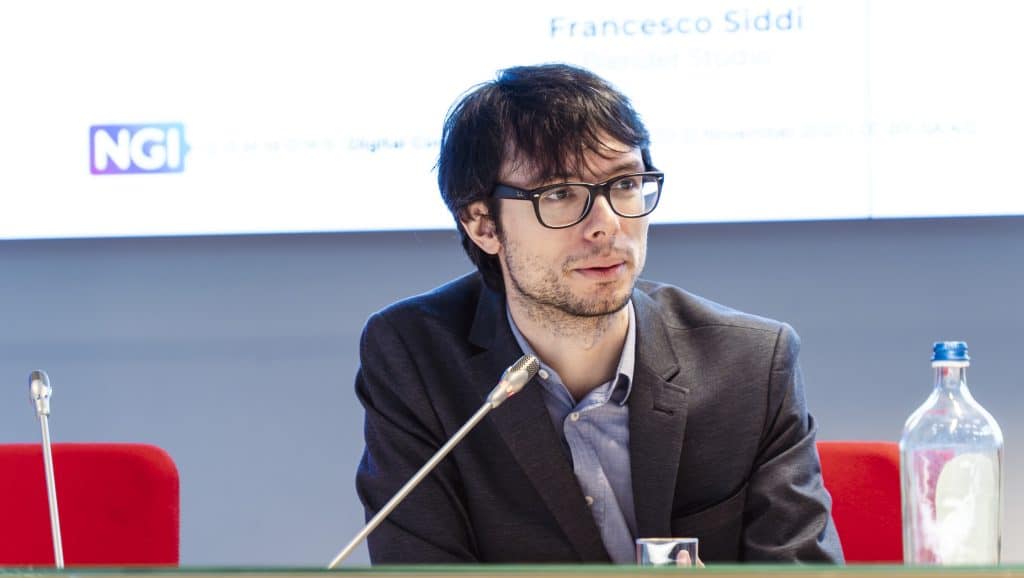
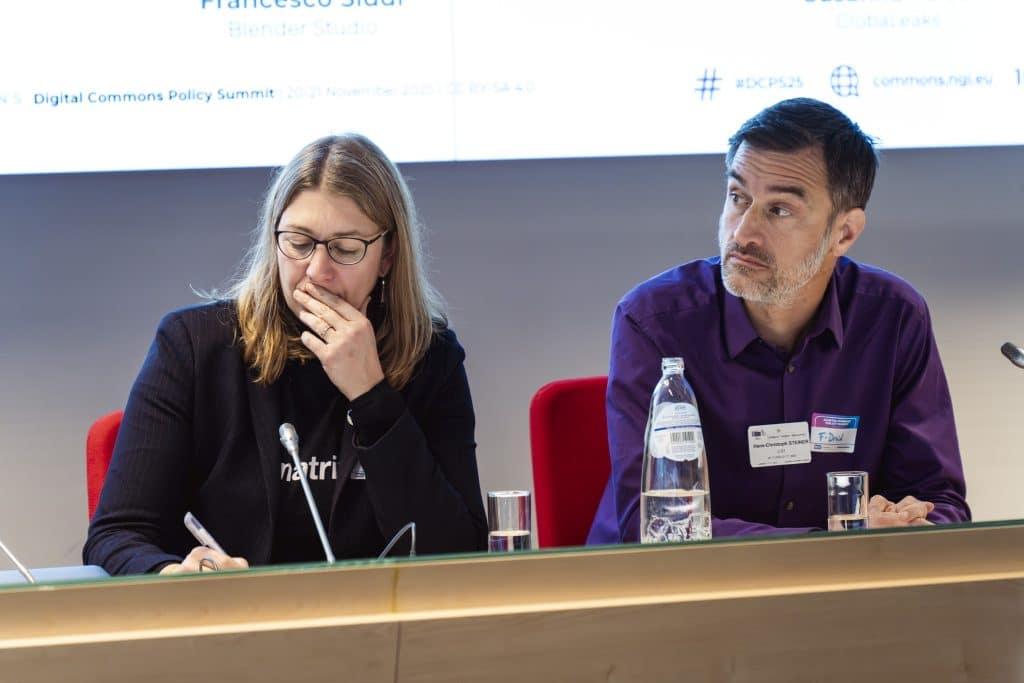
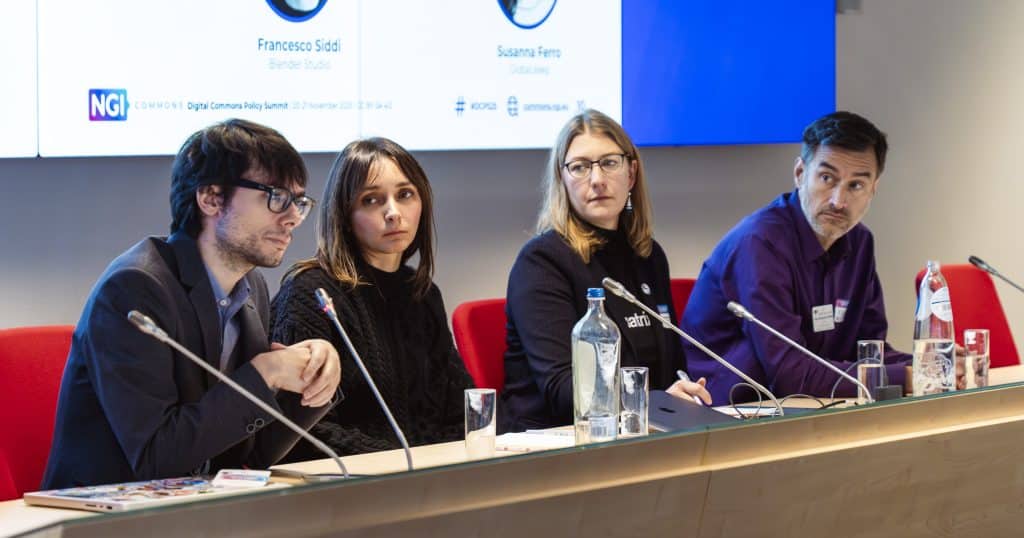
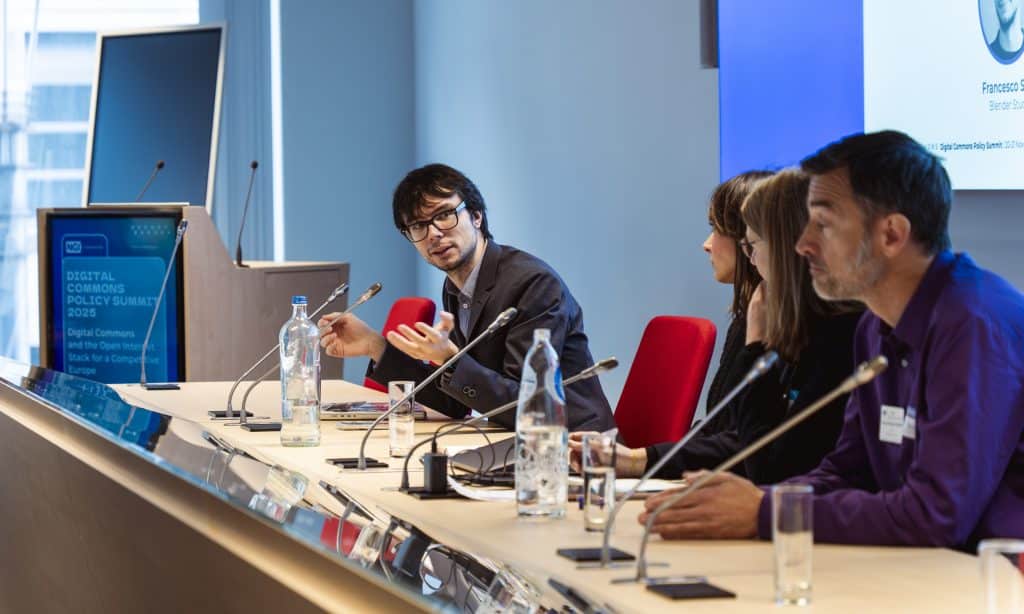
Representatives from leading projects — Matrix.org, Blender Studio, F-Droid, and GlobaLeaks — described the day-to-day challenges of sustaining essential infrastructure:
- Amandine Le Pape (Matrix.org), who was also moderating this session emphasised the need for stable, long-term funding and procurement rules that support those who build the software.
- Francesco Siddi (Blender Studio) called for simpler, less bureaucratic funding schemes.
- Hans-Christoph Steiner (F-Droid) highlighted the importance of guidance and coaching in navigating EU funding.
- Susanna Ferro (GlobaLeaks) underscored the challenge of long-term sustainability for service-based commons and the difficulty of accessing EU funds.
Across the board, maintainers stressed the need for sustainable financing, direct support mechanisms, and clearer regulatory guidance.

Looking Ahead: A Shared Mission for 2026
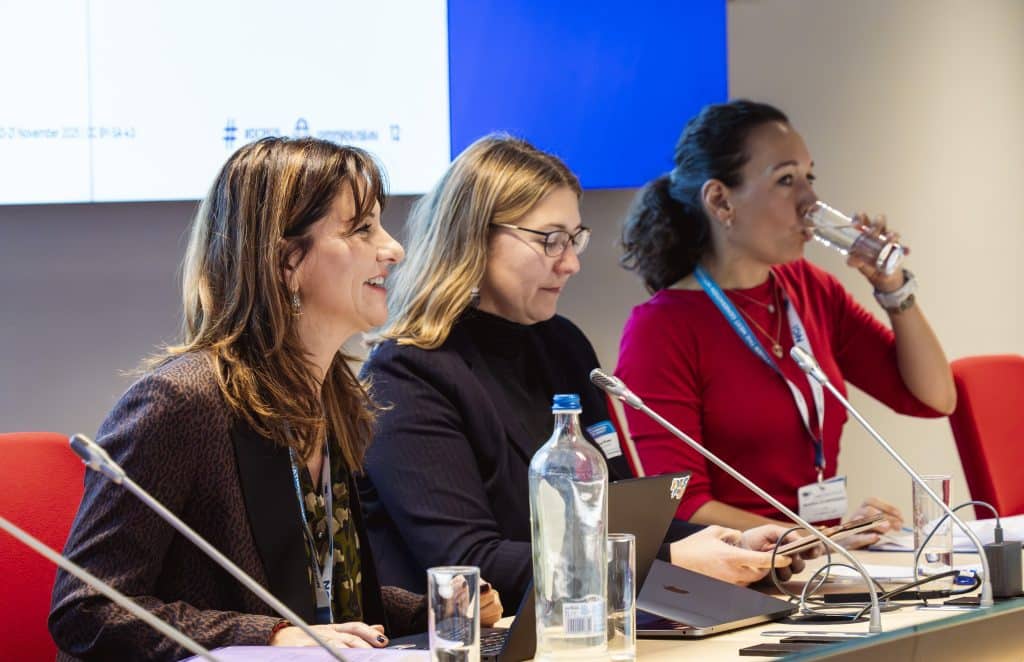
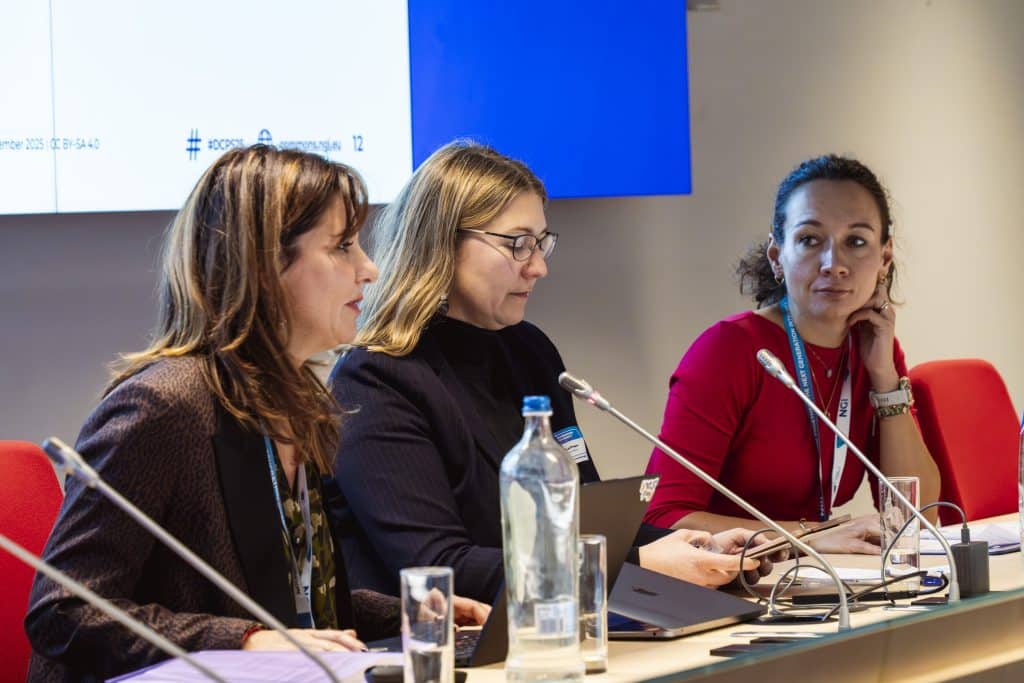
In the closing panel, moderator Dr Monique Calisti (NGI Commons, Martel Innovate) joined Amandine Le Pape and Karolina Gyurovszka (NGI Commons, Martel Innovate) in a call to maintain momentum through the Digital Commons Task Force and to reconvene at the next edition of the Summit in 2026.
A Strategic Asset for Europe’s Digital Future
The Digital Commons Policy Summit 2025 confirmed a profound shift in Europe’s digital strategy: Digital Commons are no longer experimental or aspirational — they are now recognised as foundational infrastructure for a sovereign, competitive, and democratic European digital ecosystem.
Achieving this vision will require:
- coordinated EU-level governance through the EDIC,
- strategic, multi-year funding investment,
- procurement reform that rewards interoperability and sustainability,
- strong engagement with open-source communities,
- and early, visible success stories.
If Europe succeeds, Digital Commons will become the backbone of a resilient, open, and future-ready Internet — built for Europe, with Europe, and by its communities.
20-21 November 2025, Brussels
DIGITAL COMMONS POLICY SUMMIT 2025 – REPORT
 English
  French