
In February 2026, developers, researchers, civil society actors, and public interest technologists gathered in Brussels for FOSDEM—Europe’s largest free and open source software conference. As a longstanding hub for the open source community, FOSDEM provides a unique space where infrastructure builders, policy thinkers and grassroots contributors intersect.
For NGI Commons, attending FOSDEM was an opportunity to engage directly with the communities building the Digital Commons that underpin Europe’s digital infrastructures.
What is FOSDEM and Why Was It Important to Attend?
FOSDEM (Free and Open Source Developers’ European Meeting) is a volunteer-organised event dedicated to free and open source software. Unlike many policy conferences, it is deeply technical and community-driven, with hundreds of project-led sessions across dedicated tracks (“devrooms”).
In recent years, FOSDEM has also introduced dedicated policy-focused tracks, creating space for structured dialogue between technical and policy communities. Our session was part of this evolving policy focused space at FOSDEM, reflecting the growing recognition that questions of governance, sovereignty, and public infrastructure cannot be separated from the technical layers on which they depend.
Attending FOSDEM was important because:
- It situates policy debates related to digital commons with real technical practice
- It allows direct exchange with maintainers and contributors building open source technologies, strengthening relationships with stakeholders working on commons-based models
- It surfaces emerging challenges around governance, sustainability, and long-term maintenance of digital commons and public digital infrastructure
This year’s conversations made clear that sovereignty is not only about reducing dependence—it is about actively shaping the infrastructures we rely on.
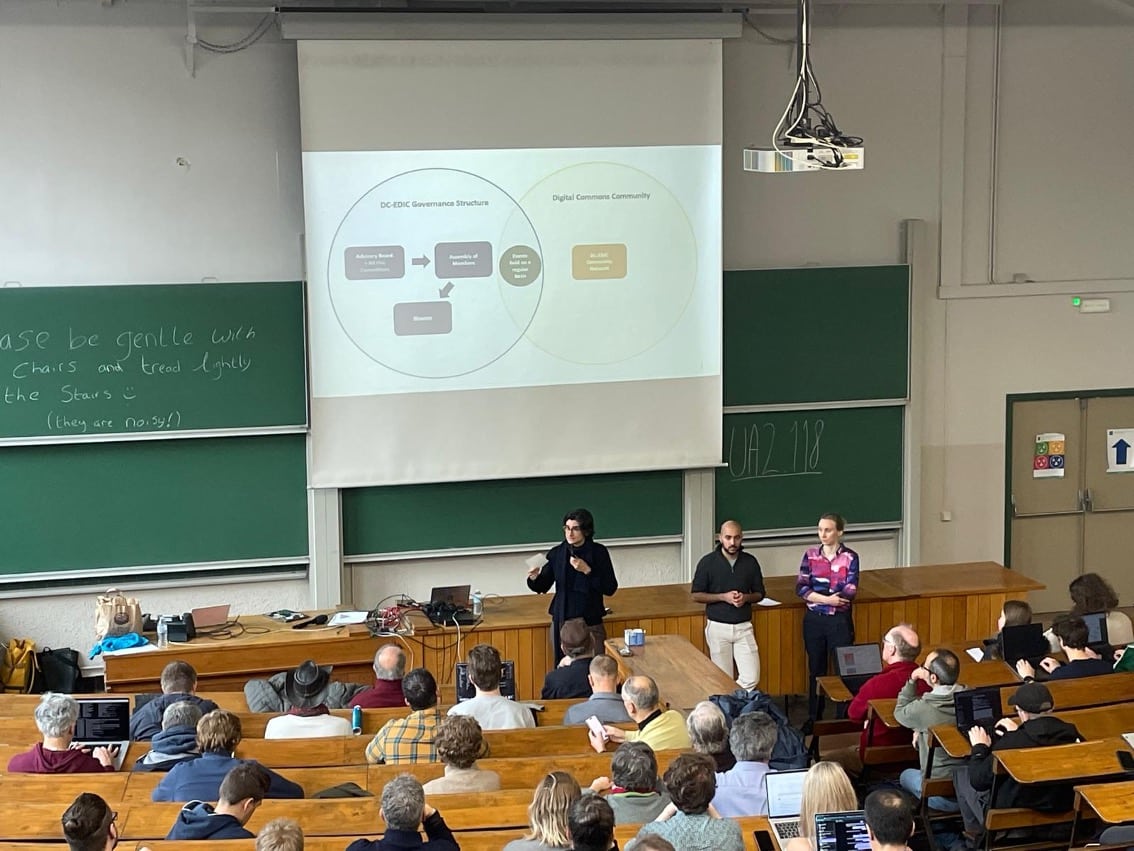
Reclaiming the Stack: An important session on DC-EDIC
Together with colleagues from ZenDiS and DINUM, NGI Commons hosted a session titled: “Reclaiming the Stack: Co-creating a European Tech Stack with DC-EDIC”. The session was well attended, despite its early time slot.
In the introductory remarks, Aditya Singh, representing Open Future, partner of NGI Commons outlined a progressive interpretation of digital sovereignty and digital commons—arguing that sovereignty must be grounded in open, interoperable, and collectively governed infrastructure that creates long-term public value.
Lea Beiermann (ZenDiS) spoke about the collaborative process that brought together German, French, and Dutch stakeholders and explained the broader story behind the establishment of the Digital Commons EDIC (DC-EDIC): why Member States became involved, and what structural challenges they aim to address.
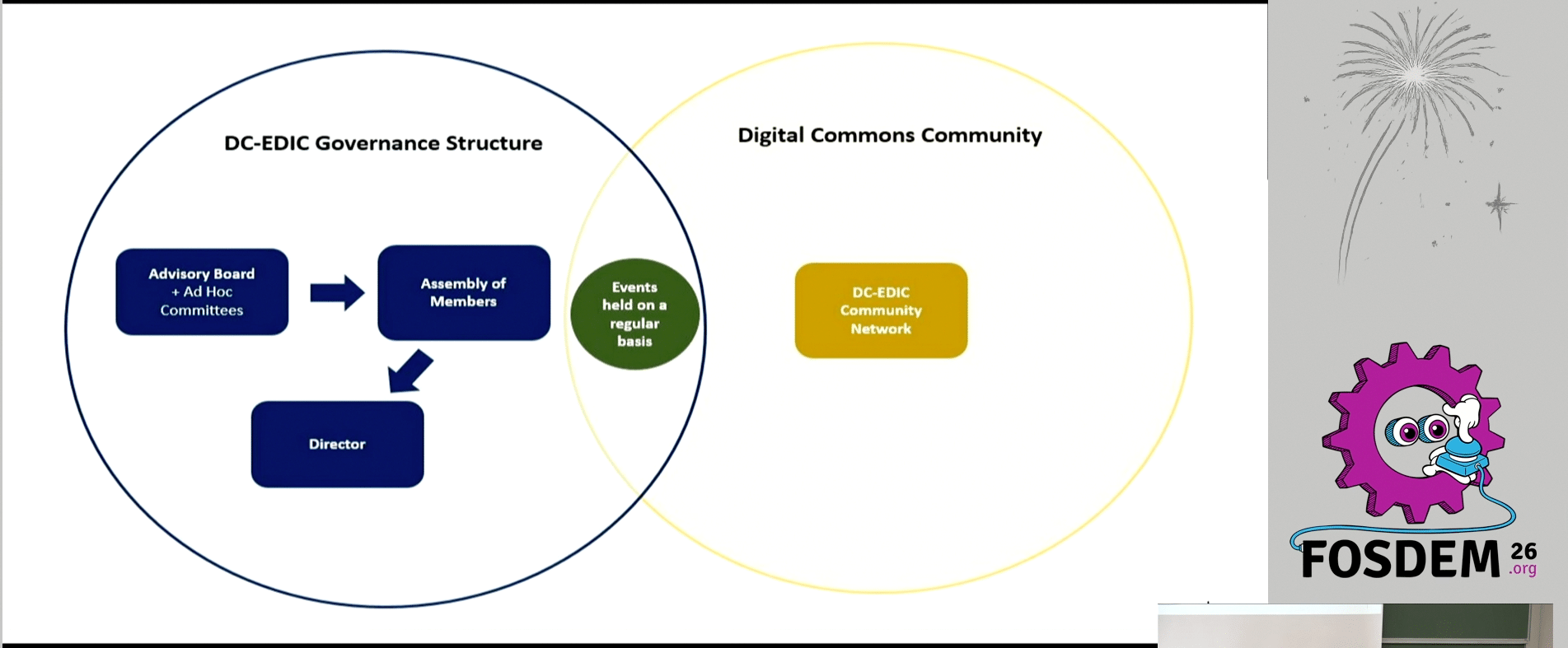
Emma Ghariani (DINUM) presented the governance structure and statutes of the EDIC, explaining how decision-making functions through its Assembly and how Member States coordinate within this framework. She also outlined the current status of the initiative and described how stakeholders can engage as the structure develops.
The discussion highlighted a strong interest from the community in understanding how collaboration between public authorities and open source communities can work in practice. It also reinforced the importance of clear governance mechanisms and meaningful engagement channels.
The video is available here: https://fosdem.org/2026/schedule/event/EZB7MP-power_to_the_public_stack_governing_europes_digital_commons/
Key Themes and Lessons Learned
Sustainability of Maintainers
Across devrooms, a recurring concern was funding and burnout. Critical infrastructure often depends on a handful of under-resourced maintainers. This reinforces NGI Commons’ core argument: Digital Commons require lifecycle funding, not short-term project grants.
Sovereignty must be infrastructural.
It is not enough to regulate platforms; Europe must cultivate and steward its own open infrastructures. This requires procurement policies that create demand for open, interoperable solutions.
Commons need institutions.
Volunteer energy is critical but insufficient. Long-term resilience requires institutional backing, predictable funding, and supportive procurement frameworks.
What’s Next?
FOSDEM remains a crucial reminder that Europe’s digital future is not only negotiated in policy rooms—it is built by communities committed to openness, collaboration, and shared stewardship.
Following FOSDEM, NGI Commons will:
- Continue supporting community-led projects that embody digital Explore mechanisms for sustainable funding of critical open infrastructure
- Continue advocating for EU funding frameworks that treat digital commons as a core sovereignty concern.
- Explore collaboration with FOSDEM communities and participants around shared objectives.
 English
  French